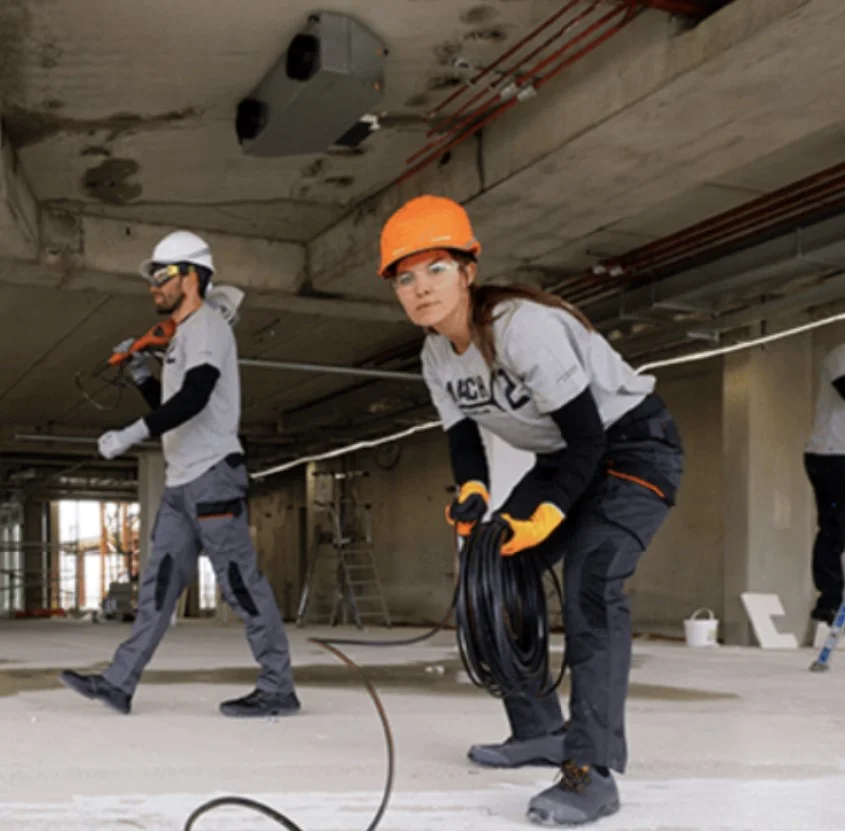
Bulk PPE Supplier Singapore: How to Equip an Industrial Workforce Safely
Buying PPE in bulk is not simply a matter of ordering more helmets, gloves or safety shoes at a lower unit price.
A construction worker, welder, chemical-handling technician and scaffolder may work on the same project while facing completely different hazards. One may need impact-resistant head protection, another chemical-resistant gloves, while another requires a properly configured personal fall-protection system.
For Singapore employers, PPE procurement should therefore begin with the work being performed and the hazards identified, not with a generic equipment catalogue.
Kaye Kaye Safety Solution is a Singapore-headquartered supplier of specialised PPE for industrial environments. Its current catalogue covers safety footwear, helmets and hard hats, protective gloves, industrial overalls and coveralls, and fall-protection equipment. The company also identifies itself as a B2B bulk sourcing entity and states that its engineering sales team assists with bulk quotations and site safety inspections.
For procurement and safety teams, the real value of bulk sourcing is therefore:
risk assessment → role-specific PPE → correct sizing → verified product documentation → planned quantities → replacement stock.
Quick Answer: How Should a Company Buy PPE in Bulk?
A practical bulk-PPE procurement process is:
1. **Review the workplace risk assessment.** Identify hazards for each job role and activity. 2. **Decide which PPE is actually required.** Different workers may need different head, hand, foot, body or fall protection. 3. **Define the required product specifications.** Include relevant standards, protection level, design and compatibility requirements. 4. **Collect workforce sizing.** Helmets, footwear, gloves, workwear and harnesses must fit the actual users. 5. **Check product-level documentation.** Do not rely only on broad terms such as "industrial grade" or a category-level webpage reference. 6. **Check compatibility between PPE items.** One item should not compromise the fit or protection of another. 7. **Prepare quantities and replacement stock.** Different PPE categories are consumed or retired at different rates. 8. **Request a detailed bulk quotation.** Confirm models, quantities, size breakdown, standards, availability and replenishment arrangements.
Singapore WSH guidance states that PPE effectiveness depends on correct selection, fit and use. Selection should consider the hazard, required protection, comfort, compatibility with other PPE, reliability and maintenance.
What Is a Bulk PPE Supplier?
A bulk PPE supplier provides personal protective equipment in quantities and configurations suitable for businesses, projects and complete workforces.
That can involve more than ordering 100 identical safety helmets.
A workforce order may require:
- several helmet configurations - multiple footwear sizes - different gloves for separate hazards - protective workwear in several sizes - fall-protection equipment for selected workers - spare and replacement stock - supporting technical documentation
Kaye currently positions itself as a B2B bulk sourcing entity and states that it can support complete workforce protective-deployment requirements across multiple PPE categories.
The important principle is that bulk does not mean identical.
Workers should receive PPE appropriate to their specific exposure.
Why Should Risk Assessment Come Before a Bulk PPE Order?
Singapore's Ministry of Manpower describes risk assessment as a core part of workplace risk management.
The process includes:
hazard identification → risk evaluation → risk control.
Risk assessments should cover both routine and non-routine operations, and controls should follow the hierarchy of control.
PPE sits within that wider system.
It should not automatically become the first response to a hazard when elimination, substitution, engineering controls or administrative measures are reasonably practicable.
Singapore WSH guidance describes PPE as a last or additional line of protection and states that its effectiveness depends on correct equipment selection, fitting and use.
For procurement teams, that means the buying sequence should be:
understand the job first → specify PPE second → purchase third.
Role-to-PPE Matrix: What Might Different Workers Need?
A simple role matrix can help organise a large order.
| Work Activity or Hazard | PPE Category to Assess | |---|---| | Falling-object exposure | Safety helmet and appropriate safety footwear | | Rough/manual handling | Suitable protective gloves and footwear | | Chemical handling | Chemical-resistant gloves plus relevant body/eye/face protection | | Welding and hot work | Heat/flame-appropriate workwear, gloves, eye/face protection and other task PPE | | Work at height | Suitable fall-restraint, fall-arrest or work-positioning equipment where required | | Wet/slippery industrial environment | Appropriate slip-resistant footwear | | Low-visibility area | High-visibility workwear where required | | Multiple combined hazards | Compatible head-to-toe PPE configuration |
This is only a planning framework.
The actual PPE specification should come from the workplace risk assessment, work procedure and applicable standards.
What PPE Categories Does Kaye Kaye Safety Solution Supply?
Kaye's current catalogue covers several major industrial PPE categories.
Safety Footwear
Kaye lists heavy-duty safety footwear and currently displays EN ISO 20345 S3 for its footwear category.
Safety footwear selection can depend on exposure to:
- impact - falling material - wet surfaces - penetration hazards - industrial flooring conditions - outdoor work
For bulk orders, size distribution is particularly important because poorly fitted footwear can affect both comfort and movement during long shifts.
Safety Helmets and Hard Hats
Kaye's current head-protection range includes high-impact ABS helmets, ventilated hard hats and climbing-style helmets with adjustable chin straps and suspension systems. Its website displays SS 98 / ANSI Z89.1 for this category.
Different helmet designs should not automatically be treated as interchangeable.
The task may require consideration of:
- falling-object hazards - retention/chin straps - ventilation - compatibility with face or hearing protection - work-at-height conditions
Singapore WSH material also identifies suitable safety helmets as PPE for falling-object exposure.
Protective Gloves
Kaye currently describes its protective gloves as providing cut, chemical and thermal resistance with rubberised palm grip and displays EN 388 / EN 374 for the category.
A bulk order should still distinguish between actual tasks.
For example: chemical handling may require chemical-specific compatibility, sharp-material handling may prioritise mechanical protection, while hot work can introduce thermal hazards.
A single "general industrial glove" should not automatically be assigned to every worker.
Industrial Overalls and Coveralls
Kaye describes its industrial overalls and coveralls as heavy-duty workwear with high-visibility elements, flame retardancy and chemical-protection features. Its website currently displays SS 473 / ISO 11612 for this category.
Because website category labels are not a substitute for model-level technical documentation, buyers should confirm the exact product specification and certification required for the intended hazard before procurement.
This is especially important for heat, flame, welding or chemical applications where different standards can address different risks.
Fall-Protection Equipment
Kaye currently lists full-body harnesses, work-positioning belts, standalone safety belts and shock-absorbing lanyards, while displaying SS 528 / EN 361 for the category.
Fall protection should be treated as a system, not simply as a harness purchase.
Depending on the work, the overall arrangement may include:
- anchorage - connector - lanyard - harness - restraint or arrest configuration - rescue arrangements
Singapore WSH guidance recognises travel restraint, personal fall arrest and work positioning among PPE systems used for work at height.
How Should PPE Be Matched to Different Job Roles?
One of the biggest mistakes in bulk procurement is creating one universal PPE kit for every employee.
Instead, group workers according to tasks and exposures.
For example:
**General Construction Worker** May require: helmet, safety footwear, suitable work gloves, high-visibility clothing where required.
**Welder or Fabricator** May require: appropriate welding/heat-protective workwear, welding gloves, suitable eye and face protection, safety footwear, additional respiratory or hearing protection depending on the task.
**Chemical-Handling Technician** May require: chemical-compatible gloves, appropriate protective clothing, eye/face protection, suitable footwear, respiratory protection where indicated by the risk assessment.
**Scaffolder or Height Worker** May require: appropriate helmet, safety footwear, gloves, work-at-height PPE selected as part of a complete system.
The exact configuration must still follow the employer's risk assessment and safe work procedures.
Why Does Worker Sizing Matter in Bulk PPE Procurement?
Correct fit is part of PPE performance.
WSH guidance states that comfort and correct fit are essential and notes that a range of sizes is often required to accommodate users properly.
Poor sizing can affect different products in different ways.
- Gloves that are too large may reduce grip and dexterity. - Safety shoes that are too loose may affect comfort and stability. - Workwear that is too tight can restrict bending, kneeling and climbing. - Poorly adjusted helmets may move during work. - Incorrectly fitted fall-protection equipment can compromise safe use.
For a bulk order, collect actual workforce sizing instead of estimating that most workers will fit one or two common sizes.
How Should Companies Check PPE Standards Before Buying?
Standards provide a more reliable starting point than generic descriptions such as:
"heavy duty", "industrial grade" or "premium safety equipment."
Kaye currently publishes several category-level references on its website, including:
- footwear — EN ISO 20345 S3 - helmets — SS 98 / ANSI Z89.1 - gloves — EN 388 / EN 374 - workwear — SS 473 / ISO 11612 - fall protection — SS 528 / EN 361
However, buyers should still verify the exact product model and supporting documentation.
A category webpage should not automatically be interpreted as proof that every model, variant or size carries identical certification.
What Product Documentation Should Procurement Teams Ask For?
Before approving a bulk order, ask for documentation relevant to the equipment being purchased.
This can include:
- exact model or SKU - manufacturer - applicable standard - classification or performance level where relevant - technical data sheet - instructions for use - care and maintenance guidance - inspection criteria - replacement or retirement guidance - compatibility information where required
For higher-risk PPE such as chemical gloves or fall-protection equipment, model-level technical information is particularly important.
The purpose is to create a traceable link between:
hazard → PPE specification → actual product supplied.
Why Does PPE Compatibility Matter?
Workers frequently wear several pieces of PPE at the same time.
Each component may perform correctly on its own but interfere with another item when worn together.
Examples include:
- helmet with face protection - safety spectacles with respirators - coveralls with fall-protection harnesses - gloves with sleeve cuffs - footwear with protective workwear
MOM specifically warns that when multiple PPE items are worn, care should be taken to ensure one item does not compromise another item's protection.
Compatibility should therefore be checked before full workforce deployment.
Should Companies Trial PPE Before Ordering Large Quantities?
For a large workforce, a limited wearer trial can be useful after the technical requirements have been established.
A trial can help assess:
- fit - comfort - dexterity - grip - mobility - heat burden - interaction with other PPE - practical suitability for the actual task
The trial should not replace certification or technical verification.
A comfortable glove that is chemically incompatible is still unsuitable.
Likewise, a technically appropriate product that cannot be worn correctly during the task may require a different model or size.
The goal is to satisfy both:
technical protection + practical usability.
How Should a Company Plan a Bulk PPE Order?
A structured procurement plan can follow this sequence:
**1. Map the Workforce** List job roles, number of workers, project locations, work activities.
**2. Map the Hazards** Identify exposure to impact, chemicals, heat, sharp objects, slips, work at height, visibility hazards, other task-specific risks.
**3. Define PPE by Role** Avoid giving everyone the same equipment unless their hazard profiles genuinely match.
**4. Define Required Standards** Include client, project, regulatory or internal requirements.
**5. Collect Sizes** Build a realistic size breakdown.
**6. Confirm Compatibility** Check how different PPE items work together.
**7. Calculate Working Quantity** Include active users + rotation sets + expected consumption.
**8. Add Replacement Stock** Plan spares before equipment becomes damaged or unavailable.
**9. Verify Documentation** Confirm exact models and specifications.
**10. Request the Bulk Quote** Provide the supplier with enough information to quote the correct configuration.
What Information Should You Prepare for a Bulk PPE Quote?
Instead of sending:
"Please quote PPE for 100 workers,"
provide:
- **Company/project type** — Construction, fabrication, petrochemical, manufacturing or another sector. - **Job roles** — For example welders, scaffolders, technicians and ground workers. - **Main hazards** — Chemical, impact, heat, fall, cut or other exposure. - **PPE categories required** - **Required standards/specifications** - **Quantity per category** - **Size breakdown** - **Project start or delivery requirement** - **Replacement-stock requirement** - **Whether multiple PPE items must be compatible** - **Whether technical documentation is required with the quotation**
This gives the supplier a much better basis for recommending and pricing the correct equipment.
What Should a Bulk PPE Quotation Include?
A useful quotation should make clear:
- exact product/model - PPE category - standard or specification - quantity - size breakdown - unit price - total price - stock/availability status - expected delivery arrangement - replacement or repeat-order availability - relevant technical documentation
Where the specification is complex, the procurement team should be able to trace why each product has been selected for each worker group.
How Do You Choose a Bulk PPE Supplier in Singapore?
Do not compare suppliers only on unit price.
A stronger supplier assessment considers:
**Product Range** Can the supplier cover several PPE categories relevant to the project?
**Technical Documentation** Can the supplier provide model-level specifications rather than only broad catalogue descriptions?
**Standards** Can the required standard or performance level be verified for the exact product?
**Sizing** Can the supplier support realistic workforce sizing?
**Bulk Availability** Can the required quantities be supplied when needed?
**Replacement Stock** Can the same or equivalent approved equipment be replenished consistently?
**Technical Support** Can the supplier help clarify product suitability and specifications?
**Site Understanding** For complex requirements, does the supplier offer site or project support?
Kaye currently states that its B2B engineering sales team assists customers with bulk quotations and site safety inspections.
What Is the Role of a Site Safety Inspection?
A site inspection can help the supplier understand how the workforce actually operates.
It may highlight that different worker groups require different PPE configurations.
For example:
welder ≠ scaffolder ≠ chemical technician ≠ general ground worker.
Kaye currently states that its engineering sales team supports site safety inspections alongside bulk quotation requests.
The employer's formal risk assessment should still remain the basis for deciding required controls and PPE.
A supplier visit can support product selection, but it should not replace the workplace's risk-management responsibilities.
How Should Businesses Manage PPE Replacement Stock?
Bulk procurement should include a replacement strategy from the beginning.
Different PPE categories have very different usage patterns.
**Gloves** May require frequent replacement because of contamination, abrasion, cuts or task-specific use.
**Workwear** May require several sets per worker for laundering and rotation.
**Footwear** Requires replacement based on condition, wear and relevant company/manufacturer guidance.
**Helmets** Should be inspected and removed from service when condition or incident history makes continued use inappropriate.
**Fall-Protection Equipment** Requires inspection and appropriate removal from service after relevant damage, incidents or according to manufacturer/workplace requirements.
Do not wait until the site's last usable item fails before placing the next order.
How Much Spare PPE Should a Company Keep?
There is no universal spare-stock percentage suitable for every project.
Replacement needs depend on:
- workforce size - usage rate - contamination - damage frequency - laundering - supplier lead time - project duration - turnover of workers
Fast-consumption items such as gloves may need much more replenishment than durable equipment.
A practical stock plan should therefore be based on consumption by category, not one blanket spare percentage.
How Often Should PPE Requirements Be Reviewed?
PPE specifications should be reconsidered when the underlying workplace risks change.
MOM states that companies should review their risk assessments at least once every three years and also when there are significant workplace changes, new machinery, substances or procedures, or an injury or incident arising from hazard exposure.
If the risk assessment changes, the PPE specification may also need to change.
Examples include:
- new chemical introduced - new welding process - different work-at-height method - new machinery - site redesign - new client PPE requirement
Bulk procurement should therefore be treated as an ongoing system rather than a one-time purchase.
Why Can Consolidated PPE Sourcing Help Large Workforces?
Sourcing several PPE categories through one supplier can reduce procurement fragmentation.
Kaye currently offers:
- safety footwear - helmets and hard hats - protective gloves - industrial overalls and coveralls - fall-protection systems
and positions itself as a B2B bulk sourcing provider.
For large projects, consolidated sourcing can potentially simplify:
- quotation management - size coordination - documentation - repeat orders - replacement planning - workforce deployment
However, convenience should never replace product verification.
Every item still needs to match its intended hazard and user.
Why Consider Kaye Kaye Safety Solution as a Bulk PPE Supplier in Singapore?
Kaye Kaye Safety Solution is headquartered in Singapore and supplies specialised PPE for industrial environments.
Its current listed sectors include:
- construction and civil engineering - oil, gas and petrochemical refineries - mining, quarrying and resource extraction - manufacturing, assembly and heavy industries
Its catalogue includes safety footwear, head protection, gloves, industrial workwear and fall-protection equipment.
Kaye also identifies itself as a B2B bulk sourcing entity, while its engineering sales team states that it assists businesses with bulk quotations and site safety inspections.
For a procurement team, the practical benefit is the ability to discuss several PPE categories as part of one workforce requirement.
The final selection should still follow:
risk assessment → required protection → exact product specification → product-level verification → sizing → deployment.
Frequently Asked Questions About Bulk PPE Suppliers in Singapore
What Is a Bulk PPE Supplier?
A bulk PPE supplier provides personal protective equipment in quantities and configurations suitable for businesses, projects and full workforces. This can include multiple product categories, sizes and replacement stock rather than individual retail purchases.
What PPE Does Kaye Kaye Safety Solution Supply?
Kaye currently lists safety footwear, helmets and hard hats, protective gloves, industrial overalls and coveralls, and fall-protection equipment.
Does Kaye Accept Bulk PPE Orders?
Kaye identifies itself as a B2B bulk sourcing entity and states that its engineering sales team assists businesses with bulk quotations.
Can Kaye Help Assess PPE Requirements?
Kaye states that its engineering sales team supports site safety inspections. The employer should still base final PPE requirements on its formal risk assessment and safe-work arrangements.
What Information Should I Prepare Before Asking for a Bulk PPE Quote?
Prepare the workforce roles, hazards, PPE categories, required standards, quantities, size breakdown, delivery requirements and replacement-stock needs.
Should Every Worker Receive the Same PPE Kit?
Not necessarily. PPE should match the worker's actual hazards. A welder, scaffolder and chemical-handling technician may require different equipment even when they work on the same project.
Why Does PPE Sizing Matter?
Correct fit affects both protection and usability. Singapore WSH guidance states that fitting and comfort are essential and that a range of sizes may be needed to accommodate different users.
How Do I Verify PPE Before Buying in Bulk?
Confirm the exact model or SKU, applicable standard, technical data, instructions for use, sizing and any task-specific performance documentation. Do not rely only on a product-category webpage.
How Much Replacement PPE Should a Company Keep?
There is no universal percentage. Stock levels should reflect consumption, damage, contamination, laundering, workforce size and supplier lead time.
How Often Should PPE Requirements Be Reviewed?
Review PPE when the underlying risk assessment changes. MOM states that risk assessments should generally be reviewed every three years and when significant process changes, new machinery/substances/procedures or relevant incidents occur.
Why Is PPE Compatibility Important?
Workers often wear several items together. One PPE item should not compromise another's protection, such as eyewear affecting respirator fit or protective clothing interfering with other equipment.
Why Use One Supplier for Multiple PPE Categories?
Consolidated sourcing can simplify quotations, sizing, documentation and replenishment. The employer must still verify that every product is appropriate for its specific hazard.
Final Thoughts: How Should Singapore Companies Buy PPE in Bulk?
Choosing a bulk PPE supplier in Singapore should not begin with:
"Who gives the cheapest unit price?"
Start with:
"What protection does each worker actually need?"
The strongest procurement sequence is:
risk assessment → job-role mapping → PPE specification → standards/document verification → worker sizing → compatibility check → quantity planning → replacement stock → bulk quotation → deployment and review.
Singapore's WSH framework makes risk assessment central to workplace safety and treats PPE as one layer within the wider hierarchy of controls.
Kaye Kaye Safety Solution currently offers footwear, helmets, protective gloves, industrial workwear and fall-protection equipment and identifies itself as supporting B2B bulk sourcing, bulk quotations and site safety inspections.
For construction companies, petrochemical operations, fabrication teams, scaffolding contractors and manufacturing businesses, the practical benefit of bulk sourcing is therefore not simply buying more equipment.
It is creating a repeatable PPE system in which:
the right worker receives the right protection, in the right size, with the right documentation, and replacement equipment is available when it is needed.
That is a stronger foundation for safe and consistent industrial workforce deployment than purchasing PPE purely by quantity or price.
Read More
Need On-Site Safety Assistance?
Speak directly to our safety specialists for transparent quotes and fast dispatch across Singapore.