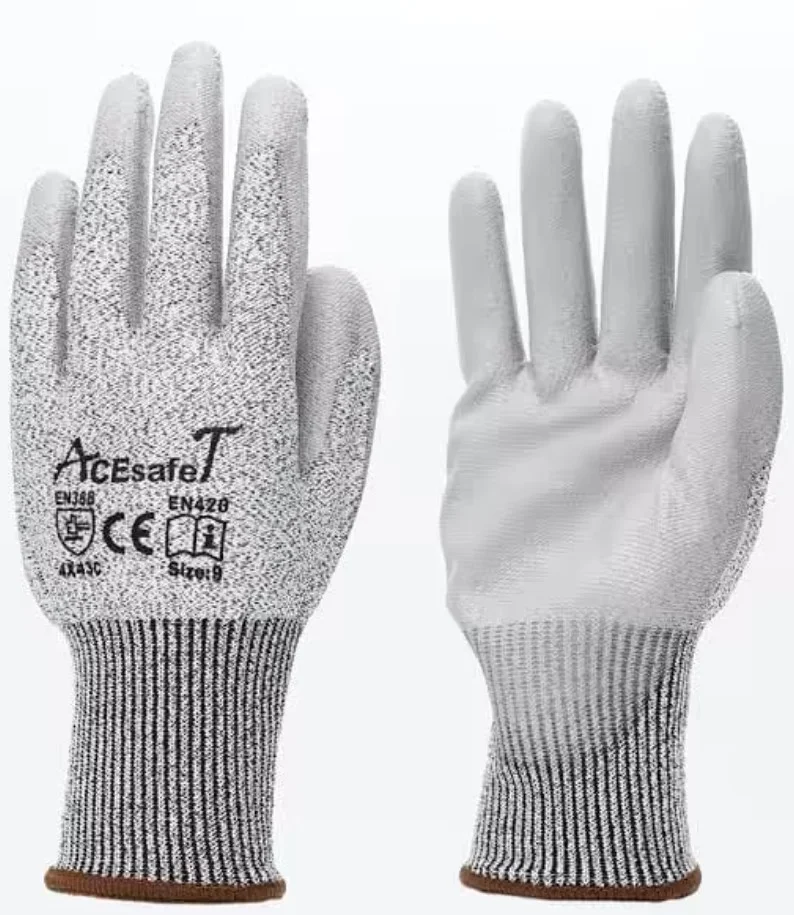
Chemical Resistant Gloves Singapore: How to Choose the Right Hand Protection
Chemical resistant gloves are not interchangeable.
A glove that performs well against one acid, cleaning agent, oil or solvent may perform poorly against another. Even the same glove material can behave differently when the chemical concentration, temperature, contact duration and working conditions change.
That makes glove selection particularly important in Singapore workplaces where employees handle hazardous substances across petrochemical plants, manufacturing facilities, marine operations, construction, maintenance, cleaning and other industrial environments.
Kaye Kaye Safety Solution currently supplies protective gloves as part of its industrial PPE range in Singapore and Southeast Asia. Its current catalogue describes the hand-protection category as providing cut, chemical and thermal resistance with rubberised palm grip and lists EN 388 / EN 374 for the category.
For employers and procurement teams, the safest question is therefore not:
"Which chemical glove is strongest?"
It is:
"Which exact glove has documented resistance to the chemical and exposure conditions involved in this task?"
Quick Answer: How Do You Choose Chemical Resistant Gloves?
A practical chemical-glove selection process is:
1. **Identify the exact chemical or product.** Use the product name, chemical name and Safety Data Sheet. 2. **Check the concentration.** The same substance at different concentrations may require different protection. 3. **Determine how contact will occur.** Brief splash exposure is different from repeated contact or immersion. 4. **Check glove-manufacturer chemical-resistance data.** Review permeation, breakthrough and degradation information for the exact glove model. 5. **Consider other hazards.** The worker may also require protection against cuts, punctures, heat or poor grip. 6. **Select the correct glove length, thickness and size.** Protection should cover the likely splash area without compromising dexterity. 7. **Establish inspection and replacement rules.** Chemical gloves should not simply be worn until a visible hole appears.
Singapore WSH guidance recommends referring to the chemical's Safety Data Sheet when selecting skin and body PPE and choosing protection suitable for the specific chemical hazard and expected work activity.
What Are Chemical Resistant Gloves?
Chemical resistant gloves are protective gloves designed to reduce contact between the worker's skin and a hazardous chemical.
The protection depends on the interaction between:
- the glove material - the exact chemical - concentration - temperature - contact duration - glove thickness - glove construction - working conditions
There is no universal glove material that offers equal protection against every:
- acid - alkali - solvent - oil - oxidiser - cleaning chemical - process chemical
Singapore's WSH approach also treats PPE as part of a broader risk-control system.
Chemical gloves should therefore complement:
- safer chemical selection where possible - containment - ventilation - safe handling procedures - employee training - emergency arrangements
rather than replace them.
Why Do Chemical Resistant Gloves Matter in Singapore Workplaces?
Skin exposure can occur during much more than a major spill.
Workers may come into contact with chemicals while:
- decanting - cleaning - wiping equipment - handling contaminated tools - opening containers - changing process components - disposing of waste - conducting maintenance - responding to leaks
Singapore's WSH Council states that chemical hazard information should be communicated through Safety Data Sheets and container labels, and that PPE must be kept in good working condition and used correctly.
MOM also requires SDSs for hazardous chemical substances or products classified under the GHS framework, subject to the applicable requirements under Singapore's SS 586 system.
Chemical-resistant gloves therefore need to be selected before exposure occurs, not after an unsuitable glove has already failed.
Chemical Exposure to Glove Selection: What Should You Check?
Different exposure patterns can require different glove characteristics.
| Exposure Situation | What Buyers Should Check | |---|---| | Brief accidental splash | Exact chemical compatibility and splash protection | | Repeated hand contact | Permeation, degradation and replacement frequency | | Immersion | Longer-duration chemical resistance and appropriate cuff length | | Solvent handling | Exact solvent compatibility rather than material name alone | | Acid or alkali handling | Chemical identity, concentration and glove performance | | Decanting or pouring | Chemical resistance plus longer cuff/gauntlet where needed | | Chemical handling with rough containers | Chemical protection plus suitable mechanical resistance | | Warm or heated chemical | Manufacturer data for the actual temperature | | Chemical mixture | Compatibility information for the formulation or its components |
This table is only a selection framework.
The final decision should still be based on the product SDS, risk assessment and glove manufacturer's documentation.
Start With the Safety Data Sheet
For workplace chemical handling, the SDS is one of the most useful starting documents.
It can provide information about:
- chemical identity - hazards - safe handling - exposure controls - required PPE - first-aid measures - spill response - storage requirements
Singapore WSH guidance specifically recommends referring to the SDS when selecting PPE for chemical exposure.
However, an SDS statement such as "wear chemical-resistant gloves" may not identify the exact glove model needed.
The next step is to check the glove manufacturer's chemical-resistance data.
A suitable selection therefore follows:
SDS → actual exposure → glove compatibility data → task-specific PPE decision.
What Information Matters Besides the Chemical Name?
The exact chemical name is only the beginning.
**Concentration** A diluted cleaning product may not create the same exposure as a concentrated industrial chemical. Do not assume that compatibility with one concentration automatically applies to another.
**Contact Duration** A worker experiencing occasional splash exposure is different from a worker whose gloves remain continuously wet with the chemical.
**Temperature** Heat can affect the performance of protective materials. OSHA notes that increased temperature can increase chemical permeation and reduce the effective protective barrier of some materials.
**Mixtures** Mixtures deserve particular caution. Chemical-resistance data may be based on individual test substances rather than the exact formulation being used at the workplace. Where compatibility is unclear, obtain product-specific advice rather than guessing from one ingredient.
What Is the Difference Between Permeation, Penetration and Degradation?
These three terms are important when evaluating chemical gloves.
**Permeation** Permeation occurs when chemical molecules move through the glove material at a molecular level. The glove may still look intact even while permeation is occurring. This is why appearance alone cannot determine chemical protection.
**Penetration** Penetration is physical movement through defects or openings such as holes, pinholes, seams or imperfections. ISO 374-2 specifically addresses resistance to penetration for protective gloves against dangerous chemicals and microorganisms.
**Degradation** Degradation is a harmful physical change in the glove material caused by chemical contact. The glove may become swollen, brittle, sticky, softer, harder, discoloured or weaker. ISO 374-4 covers testing of degradation caused by chemicals.
These mechanisms are different.
A glove can appear physically intact while still allowing molecular permeation.
What Is Breakthrough Time in Chemical Resistant Gloves?
Breakthrough time describes how long it takes a chemical to permeate through a tested glove material under specified laboratory conditions.
It is useful when comparing chemical-protection performance.
However, laboratory breakthrough time should not automatically be treated as the worker's guaranteed safe wear time.
Real workplace performance can be affected by:
- temperature - glove flexing - abrasion - concentration - contamination - previous exposure - repeated reuse - physical damage
HSE advises users to consider breakthrough time, permeation rate and degradation when comparing glove materials and to use the manufacturer's data for the specific glove and substance.
For prolonged or repeated exposure, employers should establish a conservative glove-change procedure rather than waiting until workers feel chemical contact.
What Does EN ISO 374 Mean?
The ISO 374 family deals with protective gloves against dangerous chemicals and microorganisms.
The current international ISO 374-1:2024 standard specifies terminology and performance requirements for protective gloves intended to protect against dangerous chemicals. The previous ISO 374-1:2016 edition and its 2018 amendment have been withdrawn and replaced by the 2024 edition.
Related parts include:
- ISO 374-2 — resistance to penetration - ISO 374-4 — resistance to degradation by chemicals - ISO 374-5 — microorganism risks
Kaye's current protective-glove category references EN 374, but buyers should verify the exact standard edition, marking and performance data for the specific glove model being purchased.
What Do Type A, Type B and Type C Mean?
Under the familiar EN ISO 374-1 chemical-glove classification system, gloves are grouped according to permeation performance against defined test chemicals.
The commonly used classification is:
| Classification | Minimum Tested Permeation Performance | |---|---| | Type A | At least 30 minutes against at least 6 specified test chemicals | | Type B | At least 30 minutes against at least 3 specified test chemicals | | Type C | At least 10 minutes against at least 1 specified test chemical |
Industry standard guidance describes these Type A, B and C classifications in this way.
However, this does not mean:
Type A = suitable for every chemical.
The chemical letters, test results and manufacturer documentation still need to be checked.
A Type B glove tested successfully against the exact chemical used at your workplace may be more relevant than a Type A glove whose listed chemicals do not include that substance.
The classification is a performance framework—not a universal compatibility ranking.
What Does EN 388 Mean for Chemical Gloves?
EN 388 concerns mechanical hazards rather than chemical permeation.
This can still matter for chemical-handling work.
A worker may be exposed to chemicals while:
- carrying drums - gripping rough containers - handling tools - performing maintenance - working around sharp components
A glove that is chemically compatible but easily punctured during the task may not provide reliable real-world protection.
Kaye currently lists both EN 388 and EN 374 for its protective-glove category, reflecting the need to consider chemical and mechanical risks together for industrial handling.
ISO 374-1 itself also notes that where additional hazards such as mechanical or thermal risks are involved, the relevant additional performance standard should be considered.
Which Glove Material Is Best for Chemical Protection?
There is no universal "best" material.
Different materials provide different resistance profiles.
A useful high-level comparison is:
| Glove Material | General Characteristics | Important Limitation | |---|---|---| | Nitrile | Often used with oils, greases and various industrial chemicals | Not compatible with every solvent or chemical | | Neoprene | Used across a range of acids, alkalis, oils and selected solvents | Exact compatibility still needs verification | | Natural rubber/latex | Flexible and useful against selected water-based chemicals, acids and alkalis | Latex sensitivity and chemical compatibility must be considered | | Butyl rubber | Used for certain specialised chemical and gas exposures | Heavier and more specialised | | Laminated/specialised materials | Can provide broader resistance for demanding chemical applications | Dexterity, cost and exact chemical data vary |
Recent Singapore WSH guidance identifies nitrile and neoprene among materials used for protection from chemicals such as acids, alkalis, solvents, fats, oils and organic acids, but still instructs workplaces to refer to ISO 374-1 and task-specific requirements.
These are general tendencies, not chemical-compatibility guarantees.
Always use the data for the actual glove model.
Is Nitrile Chemical Resistant?
Yes, nitrile is used extensively for chemical protection, but "nitrile" alone is not enough information to select a glove.
Two nitrile gloves can differ in:
- formulation - thickness - construction - cuff length - permeation performance - intended use
A thin nitrile disposable glove and a heavier industrial nitrile gauntlet should not automatically be treated as equivalent.
For a particular chemical, check the exact model's compatibility information.
What About Acids, Alkalis and Solvents?
Avoid rules such as:
"Use nitrile for solvents."
or:
"Rubber gloves are safe for acids."
Those statements are too broad.
Instead ask:
- Which acid? - What concentration? - Which solvent? - What temperature? - Splash or immersion? - How long will the glove remain contaminated?
Chemical selection should always move from the specific substance to the glove rather than from a general glove material to every possible chemical.
How Important Are Glove Length and Cuff Design?
Chemical protection should cover the area where exposure can realistically occur.
A wrist-length glove may be insufficient if a worker is:
- pouring chemicals - decanting liquids - immersing components - washing equipment - handling large containers - working where splash may reach the forearm
Longer cuffs or gauntlet-style gloves may provide more appropriate coverage.
Singapore's WSH guidance specifically notes that protective gloves are available in different lengths and that selecting an appropriate length is important for maximising worker protection.
Where gloves overlap with sleeves or chemical-protective clothing, the arrangement should also avoid obvious gaps.
Does Thicker Mean More Chemical Resistant?
Not necessarily.
Thickness can affect durability and sometimes permeation performance, but it should not replace actual chemical-resistance data.
A thick glove made from an incompatible material may still perform poorly against a particular chemical.
The priority is:
compatible material + tested performance + suitable construction + appropriate thickness.
Thickness alone is not a chemical-protection rating.
How Should Chemical Resistant Gloves Fit?
Correct fit affects both protection and usability.
**Gloves That Are Too Tight** They may restrict movement, increase fatigue, become harder to remove, or experience additional strain.
**Gloves That Are Too Loose** They may reduce dexterity, reduce grip, bunch around fingers, interfere with tools, or increase the chance of snagging.
Singapore WSH guidance notes that poorly fitting gloves can increase exposure risk and that gloves should be selected in an appropriate size.
For bulk workforce procurement, provide a realistic size range rather than purchasing one or two sizes for everyone.
How Do You Verify a Chemical Glove Before Buying?
Before approving a glove for chemical handling, verify the specific product, not just the glove category.
Ask for:
**Exact Glove Model** Chemical data should correspond to the product being supplied.
**Standard and Edition** Confirm the relevant EN/ISO marking and current documentation.
**Type A, B or C Classification** Where applicable, check the classification and what it actually represents.
**Chemical-Code Letters** For Type A and B markings, identify which reference chemicals correspond to the letters shown.
**Permeation Data** Check breakthrough performance against the relevant chemical.
**Degradation Data** Determine whether the chemical changes or weakens the glove material.
**Glove Material and Thickness** Useful for distinguishing products that may look similar.
**Cuff Length** Confirm whether hand-only or forearm protection is needed.
**Care and Reuse Instructions** Reusable gloves need clear cleaning, storage and replacement procedures.
**Manufacturer Compatibility Information** The final selection should rely on product-specific documentation rather than assumptions based on glove colour or material name.
Kaye's current website lists its glove category broadly against EN 388 / EN 374, so procurement teams should confirm product-level certification and chemical-performance information for the exact glove being ordered.
Can Chemical Resistant Gloves Be Reused?
Some chemical gloves are designed for repeated use, while others are disposable.
Reuse should depend on:
- glove design - manufacturer instructions - chemical exposure - contamination level - degradation - cleaning method - storage condition
Do not automatically wash and reuse a glove unless the manufacturer permits it.
Disposable gloves should not be treated as reusable industrial chemical gloves simply because they still appear intact.
For reusable gloves, establish a documented cleaning, inspection and replacement process.
How Should Chemical Resistant Gloves Be Inspected?
Check gloves before use.
Look for:
- cuts - tears - punctures - pinholes - cracking - swelling - brittleness - tackiness - unusual softness - discolouration - damaged cuffs - previous chemical contamination
Some degradation may be subtle.
A glove does not need to contain a large visible hole before its protective performance becomes questionable.
When Should Chemical Resistant Gloves Be Replaced?
There is no universal replacement interval.
Replace or remove gloves from service when:
| Condition | Recommended Response | |---|---| | Cut or punctured | Remove from use | | Cracked or brittle | Replace | | Swollen or distorted | Treat as possible chemical degradation | | Sticky or unusually soft | Stop use and assess compatibility | | Heavily contaminated | Follow manufacturer decontamination/disposal guidance | | Unknown exposure history | Do not assume protection remains intact | | Manufacturer change interval reached | Replace according to instructions |
Replacement frequency should consider the actual exposure and manufacturer's safe-use information rather than waiting for visible failure.
How Should Workers Remove Contaminated Chemical Gloves?
Poor glove removal can transfer contamination onto bare skin.
Workers should be trained to remove gloves without touching the contaminated exterior unnecessarily.
After removal:
- follow the site's decontamination procedure - dispose of or clean gloves appropriately - wash hands where required - avoid touching phones, door handles or shared equipment with contaminated gloves
Singapore WSH laboratory guidance similarly advises removing gloves in a way that prevents contact with contaminated outer surfaces and avoiding the use of contaminated gloves on office equipment or outside designated work areas.
What Other PPE May Be Needed for Chemical Handling?
Chemical gloves protect the hands.
They do not automatically protect:
- eyes - face - arms - torso - feet - respiratory system
Depending on the task, additional PPE may include:
- safety goggles - face shield - chemical-protective clothing - apron - protective footwear - respiratory protection
The SDS and risk assessment should determine the complete protective arrangement.
Kaye's wider catalogue includes protective gloves, safety footwear, head protection, industrial overalls and coveralls, and fall-protection systems. Its workwear category also describes chemical-protection features.
This supports a head-to-toe PPE approach for industrial procurement.
What Information Should You Prepare Before Requesting a Bulk Glove Quote?
For a useful B2B quotation, do not send only:
"We need 500 chemical gloves."
Prepare:
**Chemical or product name** Identify what workers actually handle.
**Concentration** Include the working concentration where relevant.
**Safety Data Sheet** Provide the current SDS where possible.
**Exposure type** Splash, repeated contact, immersion or another scenario.
**Expected contact duration** Explain how long gloves may remain exposed.
**Temperature** Mention heated chemicals or unusual process conditions.
**Mechanical hazards** Cuts, abrasion, punctures or heavy handling.
**Required cuff length** Wrist, forearm or longer coverage.
**Quantity** Include initial deployment and replacement stock.
**Size breakdown** Provide the required workforce sizing.
**Reusable or disposable requirement** Clarify how the gloves will be used.
**Required standards or site specifications** Include client, project or internal PPE requirements.
This gives the supplier far more useful information for identifying suitable products.
How Should Singapore Companies Buy Chemical Gloves for a Full Workforce?
Bulk purchasing should begin with the workplace tasks.
A useful procurement process is:
chemical inventory → SDS review → task/exposure assessment → chemical compatibility → mechanical-hazard assessment → glove sizing → trial/use evaluation → replacement planning → bulk procurement.
Kaye currently identifies itself as a B2B bulk sourcing provider and states that its engineering sales team supports bulk quotations and site safety inspections.
For larger workplaces, a consistent sourcing arrangement can help standardise:
- approved glove models - size availability - replacement stock - product documentation - workforce deployment
What Should Procurement Teams Ask a Chemical Glove Supplier?
Before ordering, ask:
- Which exact glove do you recommend for this chemical and concentration? - What permeation data supports that recommendation? - What degradation information is available? - What EN/ISO marking applies to this model? - Which test chemicals correspond to its marking? - Is it designed for splash, repeated contact or immersion? - What cuff lengths and sizes are available? - Can the glove be reused? - How should it be cleaned and stored? - When should it be replaced? - Can you provide technical documentation with the quotation?
This turns a generic glove purchase into a documented PPE-selection process.
Why Consider Kaye Kaye Safety Solution for Industrial Hand Protection?
Kaye Kaye Safety Solution supplies specialised PPE for industrial environments across Singapore and Southeast Asia.
Its current catalogue describes its protective gloves as offering:
- cut resistance - chemical resistance - thermal resistance - rubberised palm grip for heavy industrial handling
and references EN 388 / EN 374 for the category.
Kaye's listed sectors include:
- construction and civil engineering - oil, gas and petrochemical refineries - mining and resource extraction - manufacturing, assembly and heavy industries
Its broader PPE catalogue also includes footwear, helmets, industrial overalls and coveralls, and fall-protection equipment.
The company states that its B2B engineering sales team supports bulk quotations and site safety inspections. For chemical-handling workplaces, the value is therefore not simply buying a glove labelled "chemical resistant."
The objective is to match the glove to the specific substance, exposure and complete task.
Frequently Asked Questions About Chemical Resistant Gloves in Singapore
How Do I Choose Gloves for a Specific Chemical?
Identify the exact chemical and concentration, review its SDS, determine whether exposure involves splash, repeated contact or immersion, and then check the glove manufacturer's permeation and degradation data for the exact glove model.
Are All Chemical Resistant Gloves Suitable for Acids and Solvents?
No. Chemical resistance is substance-specific. A glove suitable for one acid or solvent may perform poorly against another. Always verify the exact chemical and concentration.
Is Nitrile Resistant to Chemicals?
Nitrile is commonly used for oils, greases and many industrial chemicals, but it is not universally compatible with every solvent or hazardous substance. Check the exact nitrile glove model against the chemical being handled.
What Does EN ISO 374 Mean?
ISO 374-1 specifies performance requirements for gloves intended to protect against dangerous chemicals. The current international edition is ISO 374-1:2024. Other parts address penetration, degradation and microorganism protection.
What Do Type A, Type B and Type C Mean?
The commonly used EN ISO 374 classification identifies different levels of tested permeation coverage. Type A requires at least 30 minutes against at least six specified test chemicals, Type B at least 30 minutes against at least three, and Type C at least 10 minutes against at least one. The classification does not mean the glove protects against every chemical.
What Is Breakthrough Time?
Breakthrough time is the laboratory-measured time before a chemical permeates through the tested glove material. It should not automatically be treated as guaranteed safe workplace wear time because temperature, movement, contamination and glove condition can affect real-world performance.
What Is the Difference Between Permeation and Degradation?
Permeation is chemical movement through glove material at a molecular level. Degradation is physical deterioration of the glove caused by chemical contact, such as swelling, softening, hardening or loss of strength.
Can Chemical Resistant Gloves Be Reused?
Only when the glove is intended for reuse and the manufacturer provides appropriate cleaning, inspection and reuse guidance. Disposable gloves should not automatically be reused.
When Should Chemical Gloves Be Replaced?
Replace gloves when they are punctured, cracked, swollen, sticky, brittle, distorted or otherwise degraded, or when the manufacturer's specified replacement point is reached. Do not wait for a visible hole if chemical performance may already be compromised.
Does EN 388 Mean a Glove Is Chemical Resistant?
No. EN 388 relates to mechanical hazards. Chemical resistance should be assessed separately using the relevant chemical-protection standard and product data.
What Information Should I Give a PPE Supplier?
Provide the chemical name, concentration, SDS, exposure type, expected duration, temperature, mechanical hazards, cuff requirement, quantities, size breakdown and any required safety standard.
Does Kaye Kaye Safety Solution Supply Chemical Resistant Gloves in Bulk?
Kaye currently lists chemical-resistant protective gloves within its industrial PPE range and identifies itself as supporting B2B bulk sourcing, bulk quotations and site safety inspections. Buyers should confirm the exact glove model and chemical-performance documentation for their application.
Final Thoughts: How Should Singapore Businesses Choose Chemical Resistant Gloves?
Choosing chemical resistant gloves in Singapore should not begin with the thickest glove, the most familiar material or the highest-looking classification.
Start with the chemical.
Identify:
- what substance workers handle - its concentration - how exposure occurs - how long contact may last - whether temperature affects the task - what additional mechanical hazards exist.
Then review:
SDS → chemical compatibility → permeation → degradation → glove construction → cuff length → fit → replacement procedure.
The key technical distinction is important:
penetration concerns chemicals entering through physical defects, permeation concerns chemicals moving through the glove material, and degradation concerns the glove material being damaged by chemical exposure.
A glove can therefore appear intact while its chemical protection is no longer adequate.
Singapore WSH guidance recommends selecting PPE according to the specific chemical hazard and referring to the SDS when determining skin and body protection.
Kaye Kaye Safety Solution currently lists cut-, chemical- and thermal-resistant protective gloves for heavy industrial handling and references EN 388 / EN 374 within its glove category.
For procurement teams, that should be the beginning of the product-verification process—not the end.
The most useful buying sequence is:
identify the chemical → assess the exposure → verify the exact glove → confirm documentation → size the workforce → establish replacement rules → procure.
That approach gives workers hand protection based on documented compatibility rather than assumptions about glove material, colour, thickness or price.
Read More
Need On-Site Safety Assistance?
Speak directly to our safety specialists for transparent quotes and fast dispatch across Singapore.