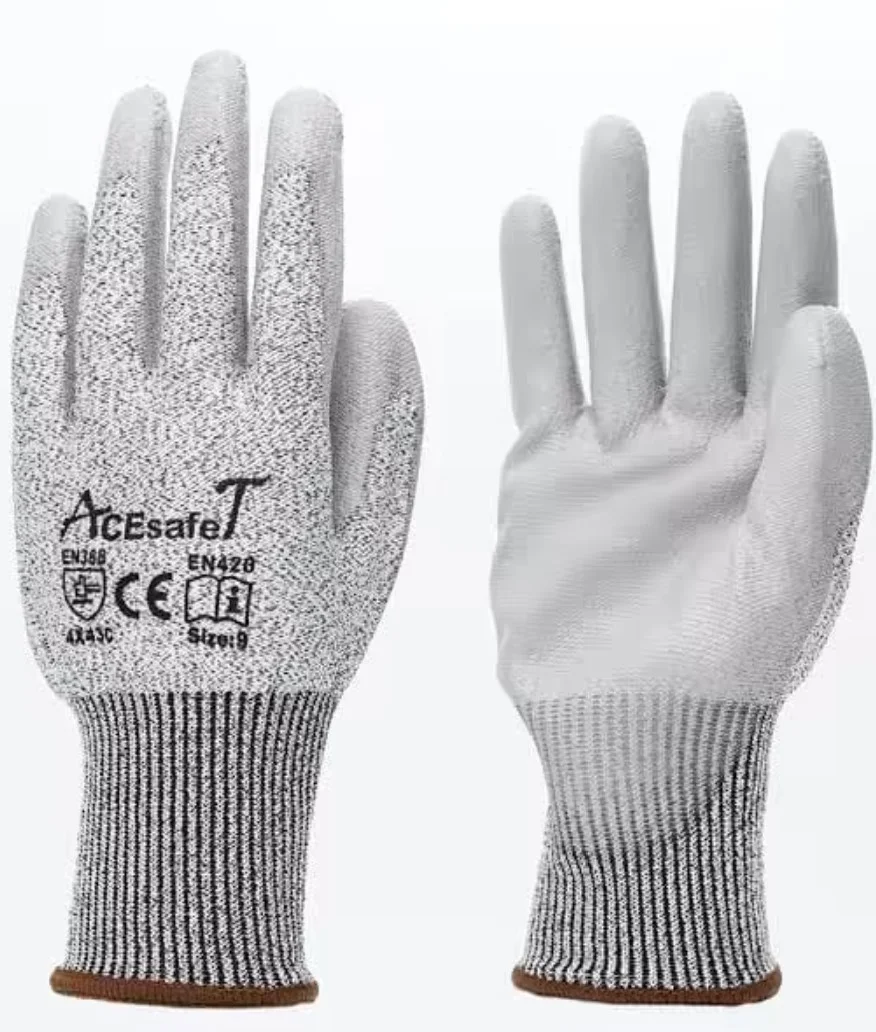
Hand protection gloves in Singapore should be selected according to the exact hazard a worker faces rather than simply by material, thickness, price or appearance.
A glove designed for handling rough construction materials may provide useful abrasion resistance but very little protection against corrosive chemicals. A chemical-resistant glove may perform well against one solvent but poorly against another. A heat-resistant glove should not automatically be used for welding, and an ordinary rubber-coated work glove should never be assumed to provide electrical insulation.
This distinction is especially important in Singapore workplaces such as construction sites, fabrication yards, manufacturing facilities, marine operations, workshops, warehouses and oil and gas environments, where workers may encounter sharp steel, chemicals, hot materials, moving machinery and tools during the same working day.
Kaye Kaye Safety Solution supplies industrial hand protection as part of its wider head-to-toe PPE range in Singapore. Its current catalogue describes cut-, chemical- and thermal-resistant protective gloves with rubberised palm grip for heavy industrial handling and references EN 388 and EN 374 for the category. Its B2B engineering sales team also provides bulk quotation support, job audits and site-safety recommendations.
The most useful purchasing sequence is therefore straightforward: identify the hand hazard, determine the protection required, verify the glove's test performance, confirm fit and dexterity, and only then compare price and quantity.
Quick Answer: How Do You Choose the Right Safety Gloves in Singapore?
Choose safety gloves by matching the glove's tested performance to the specific workplace hazard.
For cuts, abrasion, tears and punctures, EN 388 is commonly used. Chemical exposure requires chemical-specific compatibility assessment under standards such as ISO 374-1:2024. Thermal hazards can be assessed under EN 407:2020, while live electrical work requires dedicated insulating gloves such as those covered by IEC 60903.
Fit, grip, dexterity and durability should then be considered because even a correctly rated glove can become ineffective if workers cannot perform the task properly while wearing it. One glove should not be assumed to protect against every hazard.
Why Is Hand Protection Important in Singapore Workplaces?
Workers frequently place their hands close to the point where work is actually performed.
Hands hold tools, move materials, handle chemicals, position components, operate machinery and carry equipment. That exposure can result in cuts, abrasions, punctures, burns, chemical contact, crushing injuries and other harm when the hazard is not properly controlled.
Singapore's Workplace Safety and Health framework requires employers to identify workplace hazards and implement appropriate risk-control measures.
Gloves should therefore be considered one part of the control system rather than the first or only response. If a dangerous moving component can be guarded, direct chemical handling can be eliminated or a safer work process can be introduced, those measures should be considered before depending entirely on PPE.
Once residual hand hazards remain, appropriate gloves can provide an important additional protective layer.
What Types of Safety Gloves Are Used for Different Hazards?
The correct glove depends on what the worker's hand may actually contact.
Mechanical gloves are designed around hazards such as abrasion, cutting, tearing and puncture.
Chemical gloves are selected according to the specific substance being handled and how long exposure may occur.
Thermal gloves are intended for heat, flame or related high-temperature exposures.
Electrical insulating gloves are specially designed for live electrical work.
Some gloves can provide protection against more than one category, but this should be demonstrated by the relevant test results rather than assumed from the glove's appearance.
A thick glove is therefore not automatically a highly protective glove.
The standard marking and manufacturer documentation provide more useful information.
What Does EN 388 Mean on Safety Gloves?
EN 388:2016+A1:2018 is a current European standard used to assess protective gloves against mechanical risks.
It evaluates glove performance against abrasion, blade cutting, tearing and puncture. Additional testing can also provide an ISO cut-resistance classification and, where claimed, impact protection.
This is important because an EN 388 marking by itself does not mean two gloves provide the same protection.
The code printed beneath the EN 388 pictogram tells buyers how that particular glove performed in different tests.
A worker handling cardboard, a construction worker handling concrete blocks and a metal fabricator handling sharp sheet steel may all benefit from EN 388 gloves, but they may require very different performance levels.
How Do You Read an EN 388 Glove Rating?
An EN 388 performance code can contain up to six positions.
The first number refers to abrasion resistance and ranges from 0 to 4. The second refers to the traditional blade-cut test and ranges from 0 to 5. The third represents tear resistance from 0 to 4, while the fourth represents puncture resistance from 0 to 4.
The fifth position is particularly important for modern cut-resistant gloves. It uses letters A to F to represent cut resistance measured using the ISO 13997 TDM test. Level A represents the lower end of this test scale, while Level F requires the highest force to cut through the test material.
Where impact protection is tested successfully, a P can appear in the final position.
For example, seeing a high cut letter does not automatically mean the glove also has excellent puncture resistance. Each position describes a different type of performance.
What Does EN 388 Cut Level A to F Mean?
The A-to-F classification relates to the force required to cut through the glove material under the ISO 13997 test method. Level A begins at 2 newtons of cut force, B at 5 newtons, C at 10 newtons, D at 15 newtons, E at 22 newtons and F at 30 newtons.
The higher letters therefore represent greater resistance under this specific laboratory cut test.
However, choosing the highest possible cut level for every worker is not automatically the best approach.
More protective glove constructions can sometimes affect flexibility, tactile sensitivity, weight or cost. A worker carrying sharp metal may justify a substantially higher cut level than someone handling cartons or finished components.
The correct level should therefore follow the severity of the cutting hazard and the dexterity required for the job.
What Does “X” Mean on an EN 388 Glove?
An “X” in an EN 388 performance code generally means that a particular test was not performed or was not applicable to that glove.
It should not automatically be interpreted as a failed test.
This is particularly relevant to cut-resistant materials. Some materials can dull the blade used in the traditional Coup cut test, so the ISO 13997 TDM test becomes the more relevant cut-performance reference.
Buyers should therefore read the complete code rather than treating an X as proof that the glove has poor performance. What Gloves Are Suitable for Cuts, Abrasion and Puncture Risks?
Mechanical-protection gloves are relevant where workers handle rough materials, sheet metal, tools, building products, machine components and other objects capable of scraping, cutting or puncturing the hand.
The exact performance required depends on the task.
A warehouse worker moving cardboard boxes may primarily need grip and abrasion resistance.
A construction worker handling reinforcing bars may require abrasion, puncture and cut protection.
A metal fabricator working with newly cut sheet edges may require substantially higher cut resistance.
This is why the phrase “cut-resistant glove” is not detailed enough for procurement.
Employers should examine the individual EN 388 performance code and decide which properties matter most for the task. Kaye Kaye's current glove category references EN 388 and positions its protective gloves for demanding industrial handling.
Does a High EN 388 Rating Protect Against Needles?
Not necessarily.
The standard puncture test uses a defined test probe and should not automatically be interpreted as resistance against every sharp object.
Fine needles and similarly sharp points can behave differently from the objects used in a general puncture-resistance test. If workers face needlestick or other specialised puncture hazards, the employer should identify a glove specifically tested for that hazard rather than assuming a high general puncture score provides equivalent protection.
This illustrates a broader principle in glove selection: the test method needs to resemble the hazard you actually care about.
What Gloves Should Be Used for Chemical Handling?
Chemical-resistant gloves should be selected according to the specific chemical involved.
ISO 374-1:2024 is the current international standard setting performance requirements for protective gloves against dangerous chemicals. It replaced the previous 2016 edition and its 2018 amendment. ISO also makes clear that mechanical, thermal and other additional protections require their own relevant standards.
This means there is no universal “chemical glove” that is suitable for every solvent, acid, oil, cleaner or process chemical.
A glove material that performs well against one substance may degrade rapidly or allow permeation when exposed to another. The manufacturer's chemical-resistance data should therefore be checked against the exact chemical being used.
The relevant Safety Data Sheet can also help identify appropriate PPE requirements, but the glove manufacturer's compatibility information remains important when choosing the exact model.
What Do Type A, Type B and Type C Chemical Gloves Mean?
Chemical gloves can be classified according to the number of specified test chemicals for which they achieve defined permeation performance.
A Type A glove demonstrates at least 30 minutes of breakthrough resistance against at least six listed test chemicals.
A Type B glove demonstrates at least 30 minutes against at least three listed chemicals.
A Type C glove demonstrates at least 10 minutes against at least one listed chemical.
These categories should not be interpreted too simplistically as “best, medium and worst.”
A Type B glove tested successfully against the exact chemical used at your workplace can be more appropriate than a Type A glove whose listed chemicals do not include the substance you actually handle.
Always check the letter codes identifying which standard chemicals have been tested.
What Is Chemical Breakthrough Time?
Breakthrough time is an important concept in chemical-glove selection. Chemicals can pass through glove material at the molecular level even when there is no visible hole or tear. This process is called permeation.
Chemical glove tests measure how long it takes before a defined level of permeation is detected on the other side of the glove material.
Under commonly used chemical glove testing, performance levels increase from more than 10 minutes at Level 1 to more than 480 minutes at Level 6.
These laboratory results help compare materials, but they should not be treated as an automatic safe-wear time for every real workplace.
Temperature, stretching, mixtures, repeated contact and physical wear can affect actual glove performance.
The manufacturer's instructions should therefore guide practical use and replacement.
Is Nitrile Always the Best Chemical-Resistant Glove?
No. Nitrile is widely used because it combines useful physical properties with resistance to many oils and industrial substances, but it does not provide ideal protection against every chemical.
Singapore WSH guidance on chemical handling similarly notes that natural rubber, PVC, neoprene, nitrile, butyl and other glove materials have different strengths and limitations depending on the substance.
For example, a material selected for oils may not be appropriate for a particular solvent.
Instead of asking “Which glove material is strongest?”, the better question is “Which glove has documented resistance to the exact chemical and exposure conditions involved?”
What Gloves Protect Against Heat and Hot Materials?
Thermal gloves are designed for hazards involving heat, flame, hot surfaces or molten material. EN 407:2020 covers gloves and other hand-protection equipment against thermal risks including limited flame spread, contact heat, convective heat, radiant heat and molten-metal exposure.
Like EN 388, EN 407 does not provide one universal score.
Its marking contains separate performance positions for different thermal hazards.
A glove may perform well against brief contact with a hot surface while offering very different performance against flame or molten metal.
Workers should therefore select a glove according to the type of heat exposure rather than simply asking for a “heat-resistant glove.”
How Do You Read an EN 407 Thermal Glove Rating?
The EN 407 marking contains six performance positions.
They relate to limited flame spread, contact heat, convective heat, radiant heat, small splashes of molten metal and large quantities of molten metal.
Performance is generally classified from Level 1 to Level 4 within each category, while an X means that particular property was not tested or claimed.
For contact heat, for example, the performance categories correspond to test temperatures ranging from 100°C at Level 1 to 500°C at Level 4 under specified test conditions.
This does not mean a Level 4 glove lets a worker hold any 500°C object indefinitely. The test uses controlled exposure conditions, so workers and employers still need to follow the manufacturer's limitations.
Are Heat-Resistant Gloves the Same as Welding Gloves?
Not automatically.
Welding can involve a combination of heat, flame, hot metal, sparks and spatter.
A glove intended only for general contact heat may not provide the design or tested protection needed for welding work. Companies carrying out welding should therefore select gloves specifically intended for the welding process and confirm the applicable protective requirements rather than relying only on a broad “heat-resistant” description.
Kaye Kaye serves heavy-industry and welding environments, but buyers should still verify the exact certification and intended application of the individual glove model being considered.
Can Ordinary Safety Gloves Protect Against Electricity?
No.
Ordinary mechanical, leather, chemical or coated work gloves should not be treated as electrical insulating gloves.
IEC 60903:2014 applies specifically to electrical insulating gloves and mitts intended to protect workers from electric shock. It also covers composite electrical gloves that integrate additional mechanical protection.
A thick rubber coating does not make a normal industrial glove suitable for live electrical work.
Electrical glove selection also involves factors such as the glove class, condition and inspection requirements. If a worker may contact energised electrical parts, the glove must be specifically intended and maintained for electrical protection.
What Does ISO 21420 Mean for Protective Gloves?
ISO 21420:2020 provides general requirements for protective glove design, construction, innocuousness, comfort, efficiency, marking and manufacturer information.
ISO reviewed and confirmed the standard in 2025, so it remains current.
Importantly, ISO 21420 does not establish performance against specific hazards by itself.
It needs to be used together with the appropriate hazard-specific standard.
A glove designed for mechanical hazards may therefore combine general ISO 21420 requirements with EN 388 performance, while a chemical glove needs additional chemical-protection assessment.
This explains why buyers should not search for one certification number and assume it proves protection against every workplace risk.
How Do You Choose the Right Glove Material?
Material selection should follow the hazard and task.
Leather can provide useful durability and abrasion resistance for demanding mechanical handling. Coated textile gloves can combine flexibility, grip and mechanical protection.
Nitrile, PVC, neoprene and other polymer materials may be used where chemical or liquid resistance is important, but their suitability depends heavily on the chemical involved.
Thermal glove materials need to resist the particular form of heat exposure identified.
Electrical insulating gloves require specialised materials and construction tested for electrical use. Material names are therefore only the beginning of the selection process.
The finished glove's tested performance is more important.
Why Does Grip Matter When Choosing Work Gloves?
Grip affects both safety and work performance.
A worker who struggles to hold a tool or component may compensate by gripping harder, changing hand position or removing the glove.
Textured or coated palms can improve handling in many industrial tasks.
Kaye Kaye's current glove category specifically describes rubberised palm grip for heavy industrial handling. However, the operating environment matters.
A glove that grips well on a dry steel component may perform differently when oil, water or another contaminant is present. The correct grip pattern and coating should therefore reflect what the worker actually handles.
Fine assembly tasks can also require greater fingertip sensitivity than heavy construction handling.
Maximum grip and maximum thickness are not automatically the best choices.
How Important Are Dexterity and Touch Sensitivity?
Dexterity determines how easily workers can manipulate tools, fasteners, controls and small components while wearing gloves. If a glove is unnecessarily thick or stiff for the task, workers may struggle with fine movement.
That can reduce productivity and may encourage them to remove their PPE when performing precision work.
The correct glove should therefore provide sufficient protection with the least practical interference to the task. This is one reason employers should involve workers when evaluating new glove models.
A glove can perform very well in laboratory testing but still be a poor choice if the workforce cannot safely carry out its normal tasks while wearing it.
How Should Hand Protection Gloves Fit?
A protective glove should fit securely without restricting normal hand and finger movement.
Gloves that are too small can become uncomfortable, restrict motion and may be more likely to tear.
Gloves that are too large can reduce dexterity and leave loose material around the fingers.
Singapore's WSH guidance similarly recommends selecting gloves of the correct size and fit because oversized gloves may interfere with hand and finger movement.
Fit becomes especially important during long shifts in Singapore's warm working conditions.
Workers should be able to grip, flex their fingers and perform their normal task without constantly adjusting the glove. For workforce orders, employers should provide more than one glove size instead of assuming one size will suit every worker.
Should Workers Wear Gloves Around Rotating Machinery?
Not always.
This is an important exception to the general idea that gloves automatically make hand work safer. Singapore's WSH Guidelines on the Safe Use of Machinery warn that gloves can become caught by rotating machine parts and create an entanglement hazard. In situations where the hand could be drawn into moving machinery, glove use may be prohibited.
This can apply around components such as rotating spindles, chucks, shafts, rollers and similar machinery. The risk assessment should therefore determine whether gloves are appropriate before they are worn around moving machinery. A cut-resistant glove cannot protect a worker if the glove itself becomes the object that pulls the hand into the machine. Machine guarding, safe operating procedures and isolation remain critical controls.
Should Workers Wear the Same Glove for Every Task?
Usually not when the hazards change significantly.
A fabrication worker might require a cut-resistant glove while handling sharp sheet metal, a chemical-resistant glove during cleaning and specialised thermal protection during hot work.
Using one glove across every task may simplify purchasing but can leave important gaps in protection. A high cut rating does not prove chemical resistance.
Chemical resistance does not establish electrical insulation.
Electrical insulation does not automatically mean strong cut resistance.
Where workers frequently move between tasks, employers should define which glove applies to each activity and make glove changes practical.
Which Safety Gloves Are Suitable for Construction Work?
Construction work can involve rough concrete products, steel, tools, sharp edges and wet conditions.
Mechanical-protection gloves assessed under EN 388 may therefore be relevant for many handling activities. Grip can also be important when workers handle tools or materials outdoors.
However, different construction activities may require different gloves.
A worker tying reinforcing steel can face different hand hazards from someone handling sealants, performing electrical work or carrying out welding.
“Construction glove” should therefore describe an application rather than one universal glove type.
What Gloves Are Suitable for Manufacturing and Fabrication?
Manufacturing and fabrication can involve sheet metal, machined components, oils, tools and moving equipment. Cut and abrasion protection may be particularly relevant during material handling.
Where components are oily, grip performance can become important.
Workers performing precision assembly may need greater dexterity than workers carrying rough steel.
Employers should also review whether gloves are appropriate near each piece of machinery because entanglement risk can make glove use unsafe around some rotating equipment.
A task-based approach therefore works better than assigning one general glove to an entire factory.
What Gloves Are Suitable for Oil, Gas and Petrochemical Work?
Oil, gas and petrochemical operations can combine chemical, mechanical and thermal hazards.
A worker may handle oily equipment during one activity and chemicals during another.
Chemical selection should be based on the exact substance involved rather than choosing a glove simply because it is nitrile, neoprene or PVC.
Where multiple hazards overlap, the glove needs documented performance against those specific risks or workers may need to change gloves between activities.
Kaye Kaye identifies oil, gas and petrochemical refineries among the sectors it serves and supplies glove products alongside other PPE categories.
What Gloves Are Suitable for Welding and Hot Work?
Welding gloves need to be selected around the thermal and mechanical hazards of the welding process.
Heat, hot material, sparks and spatter can all be relevant.
A thin cut-resistant glove may provide excellent dexterity for handling sheet metal before welding but still be unsuitable once hot work begins.
Likewise, a bulky heat glove may be unnecessary for subsequent handling tasks.
Employers should define when specialised welding protection is required and when workers can move back to a lighter handling glove.
What Gloves Should Electrical Workers Use?
Electrical workers should use gloves selected according to the electrical hazard identified in the job.
Where live-working insulation is required, gloves covered by IEC 60903 are specifically designed for protection against electric shock.
Electrical insulating gloves should not be replaced by ordinary rubber, coated, leather or chemical gloves. Depending on the work, additional mechanical protection or other PPE may also be necessary.
The employer's electrical safe-work procedures and glove inspection requirements should guide the selection and use programme.
How Often Should Safety Gloves Be Replaced?
There is no universal replacement interval for all industrial gloves.
Replacement depends on the glove type, hazard and level of use. Mechanical gloves may need replacement when cuts, tears, worn coatings, exposed material or reduced grip indicate deterioration.
Chemical gloves may require replacement based on chemical breakthrough, degradation and manufacturer instructions even when there is no obvious visible hole.
Electrical insulating gloves have specialised inspection and testing requirements.
Heat-protection gloves may need removal from service when thermal damage, burns, holes or construction failure affect their protective performance.
Workers should inspect gloves before use, including new gloves where appropriate, for physical defects such as tears or holes. Singapore WSH guidance specifically recommends such checks.
How Should Contaminated Chemical Gloves Be Removed?
Chemical gloves should be removed in a way that avoids transferring contamination from the outside of the glove onto the worker's skin.
Singapore WSH chemical-handling guidance recommends removing gloves without contacting the contaminated external surface and washing hands after glove removal. It also advises proper disposal or specialised cleaning of contaminated gloves according to their intended use.
Disposable gloves should not be casually reused after hazardous chemical exposure.
Reusable chemical gloves should be maintained according to the manufacturer's instructions.
This makes glove removal and disposal part of the protective system, not an afterthought.
How Can Employers Build a Better Hand Protection Programme?
A strong hand-protection programme begins with a task-by-task risk assessment.
The employer should identify what may contact the hands, how severe the potential injury is and whether the hazard can first be eliminated, isolated or controlled by other means.
The appropriate glove can then be selected for the residual risk.
Workers should be trained on what each glove protects against and what it does not protect against. They should also know when gloves need to be changed, how damage is reported, how contaminated gloves are removed and when glove use may actually create a hazard around machinery.
Fit and usability should be reviewed as part of the programme.
If employees repeatedly remove their gloves because they cannot grip tools or perform fine work, the problem may be the glove selection rather than worker behaviour.
What Information Should You Give a Supplier Before Requesting a Glove Quotation?
A useful glove enquiry should describe the job rather than simply ask for “heavy-duty gloves.”
Tell the supplier what the worker handles, whether there are sharp edges, what chemicals are involved, whether surfaces are wet or oily, whether heat is present and how much dexterity the worker needs.
If the company already requires an EN 388 cut level, ISO 374 chemical classification, EN 407 thermal rating or another site-specific standard, include that information.
For workforce orders, quantity and glove sizes should also be provided. If workers carry out several distinct tasks, explain those tasks separately rather than expecting one glove to solve every problem.
Kaye Kaye's current website specifically promotes job audits, specific safety recommendations, bulk sourcing and site-safety inspection support through its B2B engineering sales team.
What Does Kaye Kaye Check Before Recommending Protective Gloves?
Based on Kaye Kaye's published B2B model, the glove discussion can begin with the workplace application rather than a generic product request.
The company supplies protective gloves described for cut, chemical and thermal hazards and serves sectors including construction, civil engineering, oil and gas, petrochemical refineries, manufacturing, heavy industry and welding. Useful information for a recommendation therefore includes the task, hazard type, required standard, handling conditions, grip needs, workforce quantity and sizing requirements.
Where chemicals are involved, the specific substance should be identified rather than asking only for a “chemical glove.” Where mechanical risk is involved, the required balance between cut protection, abrasion resistance, grip and dexterity should be considered. This creates a more useful procurement conversation than ordering one generic industrial glove for every worker.
Why Consider Kaye Kaye Safety Solution for Protective Gloves in Singapore?
Kaye Kaye Safety Solution provides protective gloves as part of a broader head-to-toe PPE range for industrial workplaces. Its current hand-protection category describes cut-, chemical- and thermal-resistant gloves with rubberised palm grip and references EN 388 and EN 374.
The company also supplies safety footwear, helmets, industrial workwear and fall-protection equipment. Its current Singapore site identifies sectors including construction and civil engineering, oil and gas and petrochemical refineries, manufacturing, heavy industry, offshore environments and welding.
For business buyers, Kaye Kaye also states that its B2B engineering sales team supports bulk quotations and site-safety inspections, while its wider service positioning includes job audits and specific safety recommendations.
This can be useful for companies that need to standardise glove requirements across several worker groups rather than repeatedly buying whichever glove is most readily available.
Final Thoughts: How Should You Choose Hand Protection Gloves?
Choosing hand protection gloves in Singapore should begin with the specific task and hazard, not the glove colour, thickness or lowest purchase price.
Mechanical hazards can be assessed using standards such as EN 388, where individual ratings distinguish abrasion, cut, tear, puncture and optional impact performance.
Chemical handling requires a different approach because glove suitability depends on the substance and permeation performance. ISO 374-1:2024 is the current international standard defining requirements for gloves protecting against dangerous chemicals.
Heat exposure requires thermal-specific assessment such as EN 407, while live electrical work requires specialist insulating gloves such as those covered by IEC 60903.
Just as importantly, gloves are not automatically safer in every situation. Singapore's WSH machinery guidance specifically identifies loose gloves as a possible entanglement hazard around rotating equipment.
Fit, grip, dexterity and worker acceptance then determine whether the selected protection remains practical during the shift.
Kaye Kaye Safety Solution's current protective-glove range focuses on cut, chemical and thermal industrial applications and sits within its wider PPE offering for construction, fabrication, manufacturing, marine, oil and gas and other higher-risk workplaces. Its B2B support also includes bulk sourcing, job audits and site-safety recommendations.
For employers and procurement teams, the most useful question is therefore not “Which glove offers the most protection?” It is “What can injure the worker's hands during this specific task, which test performance addresses that hazard, and which glove provides enough protection without creating a new problem with grip, dexterity, heat or machinery?”
Frequently Asked Questions About Hand Protection Gloves in Singapore
Frequently Asked Questions
Need On-Site Safety Assistance?
Speak directly to our safety specialists for transparent quotes and fast dispatch across Singapore.