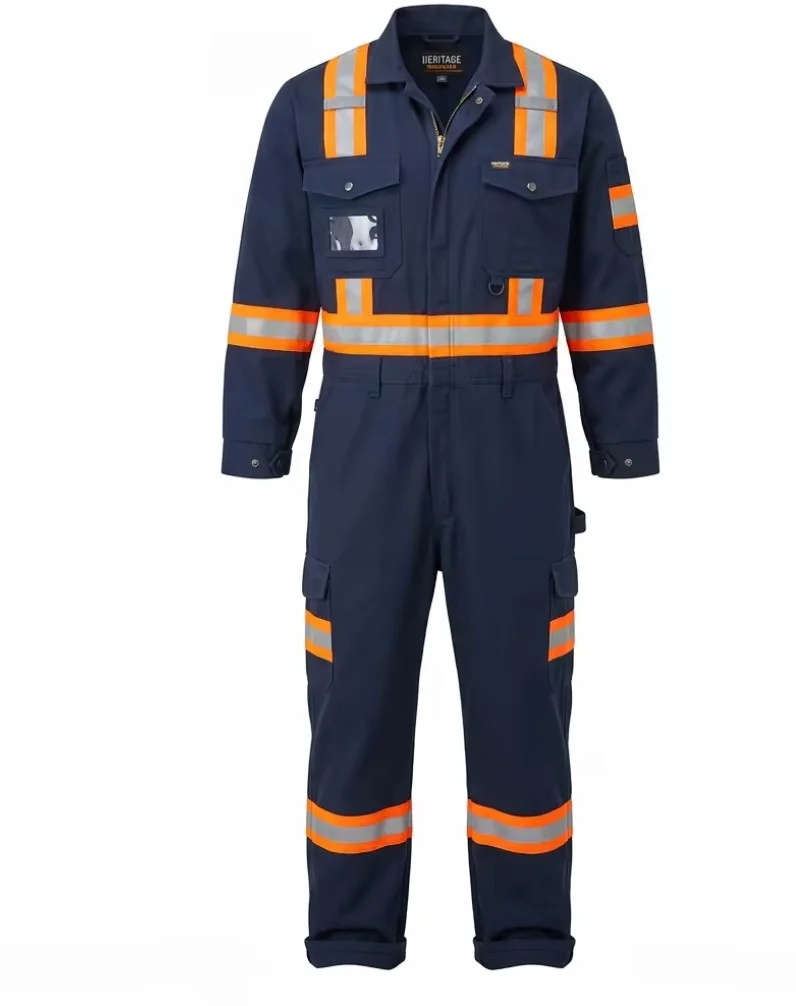
Welders Pants Singapore: Choosing Protective Workwear for Welding Tasks
Welding sparks may look small, but hot metal trapped against clothing can quickly become a burn hazard.
The exposure can become greater when a worker is kneeling, crouching, welding overhead or working in a confined position where sparks and molten particles can fall directly onto the lower body.
That is why ordinary work trousers should not automatically be treated as suitable welding protection.
Welding clothing needs to be selected according to the actual hazards involved: sparks, molten-metal spatter, flame, radiant heat, work position and surrounding site conditions.
In Singapore, these considerations are particularly relevant across fabrication yards, construction sites, shipyards, manufacturing facilities, offshore operations and petrochemical environments where welding forms part of hot work.
Kaye Kaye Safety Solution currently supplies industrial overalls and coveralls rather than listing a dedicated standalone "welders pants" product category. Its current workwear range is described as heavy-duty industrial clothing with flame-retardant, chemical-protection and high-visibility features and is listed by Kaye against SS 473 / ISO 11612.
For buyers searching for welders pants in Singapore, the important question is therefore not simply:
"Which trousers are thick enough?"
It is:
"Which protective garment is suitable for the welding hazards identified at this worksite?"
Quick Answer: What Should Welders Wear on Their Legs?
Welders should wear lower-body protective clothing selected for the heat, flame, sparks and molten-metal exposure identified in the workplace risk assessment.
Depending on the task, this may involve:
- protective welding trousers - flame- and heat-protective industrial workwear - overalls - full coveralls - additional leather or specialised protective garments for higher spark exposure
Ordinary work trousers should not automatically be treated as welding PPE simply because they are thick.
For welding-specific clothing, buyers should also distinguish between broad heat-and-flame standards and standards specifically written for welding.
ISO 11612 covers protective clothing for heat and flame across a range of industrial uses, while ISO 11611:2024 specifically addresses protective clothing for welding and allied processes, including protection against welding spatter, short flame contact and radiant heat from the welding arc.
The exact garment should still be selected according to the actual welding process and site risk assessment.
What Are Welders Pants?
"Welders pants" is commonly used as a search term for protective lower-body workwear used during welding and related hot work.
In practice, lower-body protection can take several forms.
A worker may use:
- protective trousers for lower-body coverage, - overalls or coveralls for more continuous protection, - or additional protective garments such as aprons or other task-specific equipment when the welding exposure requires it.
Kaye Kaye Safety Solution currently positions its relevant workwear around industrial overalls and coveralls, not a standalone welders-pants collection.
That is an important distinction for buyers.
The search term may be "welders pants," but the safest product solution may actually be a protective coverall depending on the task.
Welding Hazard to Workwear Feature: What Should You Look For?
A useful way to select protective workwear is to connect the hazard directly to the garment requirement.
| Welding Hazard or Work Condition | Workwear Feature to Consider | |---|---| | Falling sparks | Protective material suitable for heat/flame exposure | | Welding spatter | Garment tested for the relevant molten-particle exposure | | Overhead welding | More continuous body coverage and fewer exposed gaps | | Sparks falling from above | Closures and pocket designs that reduce trapping points | | Crouching and kneeling | Adequate mobility and durable construction | | Repeated physical work | Correct fit without excessive loose fabric | | Hot Singapore conditions | Required PPE combined with heat-stress controls | | Chemical exposure | Relevant chemical-protection properties where required | | Low-visibility work areas | High-visibility features where the site requires them |
The exact specification should come from the worksite risk assessment rather than from the garment's appearance alone.
Why Is Protective Clothing Important During Welding?
Welding produces more than visible sparks.
Hot work can expose workers to:
- flame - heat - molten-metal spatter - hot surfaces - welding fumes - radiation from the arc - electrical hazards - surrounding combustible materials
Singapore's WSH guidance for marine industries identifies welding and cutting as hot work and states that required PPE should be specified through work procedures, permit-to-work arrangements or both.
The guidance specifically refers to suitable eye protection, breathing protection or adequate ventilation where fumes are hazardous, and other protective clothing appropriate to the actual work environment.
Welding pants or coveralls should therefore be considered one layer within a broader safety system.
They do not replace:
- welding helmet and eye protection - gloves - safety footwear - respiratory protection where required - ventilation - fire controls - safe work procedures
Why Should Risk Assessment Come Before Choosing Welding Pants?
Singapore's workplace risk-management framework requires employers and other duty holders to identify hazards, evaluate risks and implement controls.
MOM states that risk assessments should cover routine and non-routine work and that hazards should be controlled using the hierarchy of controls.
This matters because welding exposure changes significantly from one task to another.
For example:
- Bench welding may expose the worker mainly from the front. - Overhead welding can send sparks and molten particles downward onto the worker. - Confined-space welding can introduce ventilation and fume concerns. - Marine hot work may involve combustible residues or complex permit-to-work controls. - Outdoor fabrication can add heat-stress exposure.
The garment should therefore follow the task.
One generic pair of work pants should not automatically be issued for every welding activity without considering the actual exposure.
What Can Happen If Welding Clothing Is Unsuitable?
Unsuitable clothing can create avoidable trapping points.
Hot particles can enter:
- open pockets - loose openings - folded hems - gaps between separate garments
The garment may also become unsafe if it is badly fitted.
Excessively loose fabric can interfere with movement or nearby equipment.
Clothing that is too tight can restrict:
- kneeling - climbing - crouching - reaching - normal work movement
The objective is not simply maximum thickness.
Protective workwear should combine:
appropriate protection + coverage + fit + movement.
What Materials Are Suitable for Welding Workwear?
There is no single material that is automatically best for every welding task.
Selection depends on:
- welding process - spark intensity - molten-metal exposure - heat level - duration - mobility required - other workplace hazards
Flame- and Heat-Protective Workwear
Kaye currently describes its industrial overalls and coveralls as providing flame retardancy together with chemical-protection and high-visibility features. Its website lists SS 473 / ISO 11612 for this category.
ISO 11612 concerns protective clothing used where workers may be exposed to heat and flame, including radiant, convective or contact heat and certain molten-metal splash hazards.
This can make ISO 11612-referenced workwear relevant to industrial heat hazards.
However, it is important not to assume that every ISO 11612 garment is automatically certified for every welding process.
What About Leather?
Leather is commonly used for welding-related protective equipment where exposure to sparks and hot particles can be significant.
Examples can include:
- gloves - aprons - sleeves - specialised protective pieces
The trade-off is that large leather garments can be heavier and warmer during prolonged physical work.
The amount of direct exposure and the worker's mobility therefore need to be considered.
Is Ordinary Cotton Enough for Welding?
Ordinary cotton should not automatically be treated as certified welding PPE.
A thick cotton pair of trousers may be durable, but fabric weight alone does not establish how the garment performs against:
- flame - radiant heat - welding spatter - other site hazards
If the workplace assessment identifies a requirement for protective clothing, buyers should select garments with documented performance appropriate to the task.
Terms such as "heavy duty" or "work pants" are not substitutes for actual protective specifications.
ISO 11612 vs ISO 11611: What Is the Difference?
This is an important distinction for welding PPE buyers.
ISO 11612
ISO 11612 is a broader heat-and-flame protective-clothing standard.
It specifies performance requirements for clothing used where workers may face heat or flame, including radiant, convective and contact heat and certain molten-metal splash exposures.
Kaye currently lists ISO 11612 alongside SS 473 for its industrial overalls and coveralls.
ISO 11611
ISO 11611:2024 is specifically titled:
Protective clothing for use in welding and allied processes.
It covers minimum safety requirements and testing for welding clothing intended to protect against hazards including:
- welding spatter - short contact with flame - radiant heat from the electric arc - welding-generated optical radiation within the standard's scope
The standard also includes garment-design requirements covering areas such as pockets, closures and seams.
Is ISO 11612 Enough for Welding?
Not automatically.
An ISO 11612 reference indicates heat-and-flame performance, but buyers should check whether the actual garment has the certification and classification required for the welding work being performed.
For welding-specific protective clothing, ISO 11611 is the more directly relevant international standard.
Kaye's public workwear category currently lists ISO 11612 rather than ISO 11611, so companies needing welding-specific certification should confirm the exact product documentation with the supplier before procurement.
This is especially important for higher-risk welding work or sites with specific PPE specifications.
What Design Features Matter in Welders Pants?
Good welding workwear should minimise places where hot particles can become trapped.
Important garment considerations include:
**Pocket Design** Open pockets can become collection points for falling sparks or particles. Welding-specific standards therefore consider pocket and closure design as part of protective-garment construction.
**Lower-Leg Construction** Deep folded cuffs or other trapping points deserve attention where sparks can fall downward.
**Closures** Fasteners and garment openings should not unnecessarily expose the worker to hot particles.
**Coverage** The garment should maintain useful coverage when the worker: - bends - crouches - climbs - kneels - reaches overhead
**Mobility** Protective workwear must still allow the worker to move safely. Kaye describes its PPE approach around safety, comfort and durability, which is important because protective clothing needs to remain practical throughout the shift.
Welding Pants vs Coveralls: Which Is Better?
Neither option is automatically better for every welding job.
| Protective Trousers | Protective Coveralls | |---|---| | Flexible lower-body solution | More continuous body coverage | | Can be paired with separate upper-body PPE | Reduces the gap between trousers and upper garment | | Easier to change one garment component | Useful where sparks may reach several body areas | | Suitability depends on task | Suitability still depends on task |
Separate trousers may work well where different upper- and lower-body garments need to be combined.
Coveralls can provide an advantage where more continuous coverage is desirable.
Kaye's current relevant workwear category focuses on industrial overalls and coveralls.
For buyers searching specifically for welding pants, it is therefore worth considering whether a coverall actually matches the risk assessment better.
How Do You Choose Welding Pants or Workwear in Singapore?
A useful procurement process is:
**1. Identify the Welding Hazard** Consider: welding process, spark exposure, spatter, radiant heat, flame exposure, work position, duration, surrounding hazards.
**2. Identify the Required Standard** Do not purchase by fabric description alone. Determine whether the site requires general heat/flame protection, welding-specific protective clothing, or additional chemical or visibility requirements.
**3. Check the Actual Product Documentation** Verify the exact garment certification rather than relying only on a category description.
**4. Review Garment Construction** Check pockets, openings, closures, leg construction, seams and coverage.
**5. Check Fit and Movement** The worker should be able to crouch, climb, kneel, reach and walk normally.
**6. Check Compatibility With Other PPE** The garment needs to work correctly with safety footwear, gloves, helmet, welding jacket or upper garment, and fall-protection equipment where required.
**7. Consider Singapore Heat Conditions** Heat stress should be controlled through the work arrangement without simply removing necessary welding protection.
**8. Plan Maintenance and Replacement** Protective garments need inspection and replacement once their protective condition may be compromised.
What Should Buyers Confirm Before Ordering Welding Workwear?
Before purchasing, ask the supplier:
- What exact standard does this garment comply with? - Is the certification for the complete garment or only a material/component? - Is this product specifically intended for welding? - Which welding exposures or applications is it suitable for? - What material and construction does it use? - What size range is available? - What washing and care instructions apply? - How should damaged garments be assessed? - Can replacement stock be supplied consistently? - Are bulk sizing arrangements available for crews?
For welding-specific projects, also ask whether the garment has documentation relevant to ISO 11611 or another project-required welding specification.
What Other PPE Should Be Used With Welding Workwear?
Protective trousers or coveralls are only one part of welding PPE.
Depending on the risk assessment, workers may also need:
- welding helmets - suitable eye protection - protective gloves - safety footwear - respiratory protection - fall protection - hearing protection
Singapore's marine hot-work guidance specifically states that PPE requirements should be defined according to the work environment and may include eye protection, ventilation or breathing protection and other protective clothing.
Kaye currently supplies a wider PPE range that includes:
- industrial workwear - safety footwear - protective gloves - safety helmets - fall-protection harnesses and lanyards
Its current website describes footwear for high-risk fabrication yards and gloves with cut-, chemical- and thermal-resistant properties.
This can be useful for companies procuring coordinated PPE for an entire workforce.
How Does Singapore's Heat Affect Welding Workwear Selection?
Welding protection and heat-stress management need to work together.
Singapore's climate can increase the physical burden of wearing protective clothing, particularly for workers carrying out manual tasks outdoors.
MOM requires employers and occupiers to assess heat-stress risks for outdoor work and implement measures according to workplace conditions and Wet Bulb Globe Temperature bands.
The solution is not simply to reduce required welding protection.
Heat controls can instead include appropriate measures such as:
- work-rest arrangements - hydration - shade - ventilation - scheduling - other site-specific heat controls
The worker should remain protected from both the welding hazard and heat stress.
How Should Welders Pants and Coveralls Fit?
Protective workwear should allow normal movement without excessive loose material.
**Too Tight** The worker may struggle to kneel, crouch, climb or reach.
**Too Loose** Excessive fabric can create unnecessary folds, interfere with movement, or interact poorly with machinery or other PPE.
Coverage should also remain adequate when the worker bends or reaches.
For employers purchasing for a full crew, proper size selection matters.
The safest protective garment is less useful if workers cannot wear it correctly throughout the shift.
When Should Welding Workwear Be Replaced?
Protective clothing should be inspected regularly.
Possible warning signs include:
| Garment Condition | Recommended Response | |---|---| | Burn hole | Remove from use and assess according to manufacturer guidance | | Significant tear | Assess whether protection has been compromised | | Damaged seam | Follow approved repair/replacement guidance | | Heavily worn fabric | Replace when protective integrity is doubtful | | Serious contamination | Follow manufacturer cleaning/decontamination instructions | | Damaged visibility elements | Assess against site visibility requirements | | Damage after significant incident | Remove from service until suitability is confirmed |
Do not assume that protective workwear remains suitable indefinitely just because it is still wearable.
Welding, abrasion, chemicals, repeated washing and general industrial use can gradually affect garment condition.
Always follow the manufacturer's care instructions.
How Should Companies Buy Welding PPE for a Full Crew?
Bulk PPE procurement should begin with the work activities rather than with a product catalogue.
A useful workforce specification should include:
- welding tasks performed - site conditions - required standards - garment sizes - compatibility with other PPE - replacement frequency - spare stock - washing/care requirements - documentation required by the project or client
Kaye Kaye Safety Solution currently identifies itself as a B2B bulk sourcing provider and states that its engineering sales team supports bulk quotations and site safety inspections.
The company also offers several PPE categories, allowing employers to source workwear, footwear, gloves, helmets and fall-protection equipment from one supplier.
For larger workforces, this can simplify:
- sizing - procurement - documentation - replacement planning - workforce deployment
Why Consider Kaye Kaye Safety Solution for Welding PPE?
Kaye Kaye Safety Solution supplies specialised PPE for industrial environments across Singapore and Southeast Asia.
Its current website specifically identifies welding among the environments its PPE is designed to support and lists sectors including:
- construction and civil engineering - oil, gas and petrochemical refineries - mining and resource extraction - manufacturing and heavy industry
Its current industrial workwear category includes heavy-duty overalls and coveralls described as featuring:
- flame retardancy - chemical protection - high-visibility retro-reflective elements
and is listed against SS 473 / ISO 11612.
Kaye also supplies:
- protective gloves - safety footwear - helmets - fall-protection equipment
and states that its B2B engineering sales team can assist with bulk quotations and site safety inspections.
For welding businesses, the practical value is therefore broader than buying one pair of trousers.
Kaye can support a more complete PPE sourcing requirement.
However, where a project specifically requires welding-certified protective clothing such as ISO 11611, buyers should confirm the exact product certification and documentation before ordering.
Frequently Asked Questions About Welders Pants in Singapore
What Should Welders Wear on Their Legs?
Welders should wear protective lower-body clothing suitable for the heat, flame, sparks and welding spatter identified in the workplace risk assessment. Depending on the work, this can include protective trousers, overalls or coveralls.
Can Ordinary Work Pants Be Used for Welding?
Ordinary work pants should not automatically be treated as welding PPE. Thickness alone does not establish protection against flame, radiant heat or welding spatter. Use documented protective clothing suited to the task.
What Material Is Best for Welding Pants?
There is no single best material for every welding process. The correct choice depends on heat, spatter, work position, mobility and other site hazards. Buyers should focus on documented protective performance rather than material name alone.
Are Cotton Pants Safe for Welding?
Ordinary cotton trousers are not automatically certified welding protection. If protective clothing is required by the risk assessment, select garments with appropriate documented performance for the welding hazards involved.
Are Coveralls Better Than Welding Pants?
Not universally. Coveralls provide more continuous coverage and reduce gaps between upper- and lower-body garments, while separate trousers offer flexibility. The safer option depends on the specific welding task.
What Is the Difference Between ISO 11612 and ISO 11611?
ISO 11612 is a broader standard for protective clothing against heat and flame. ISO 11611:2024 specifically covers clothing for welding and allied processes, including welding spatter, flame and radiant heat from the arc.
Is ISO 11612 Enough for Welding?
Not automatically. An ISO 11612 garment provides documented heat-and-flame performance, but buyers should check whether the garment is certified for the particular welding application. ISO 11611 is the more welding-specific standard.
Should Welding Pants Have Cuffs?
Garment construction should minimise areas where hot particles can collect. Deep folded hems or other trapping points therefore deserve attention when selecting welding clothing.
How Should Welding Workwear Fit?
It should provide adequate coverage while allowing safe kneeling, crouching, climbing and reaching. Avoid clothing that is excessively tight or unnecessarily loose.
When Should Welding Workwear Be Replaced?
Replace or remove clothing from service when burn holes, tears, seam damage, excessive wear or contamination may compromise its protective function. Follow the garment manufacturer's inspection and care guidance.
What PPE Should Be Worn With Welding Pants?
Depending on the risk assessment, welding work may also require eye and face protection, welding gloves, safety footwear, respiratory protection and other PPE. Protective trousers or coveralls are only one part of the complete safety system.
Does Kaye Kaye Safety Solution Supply Welding Workwear?
Kaye currently supplies industrial overalls and coveralls for heavy industrial environments, including welding-related applications. Its website lists flame-retardant, chemical-protection and visibility features and references SS 473 / ISO 11612. Buyers needing welding-specific certification should confirm the exact garment documentation before ordering.
Can Kaye Supply PPE for an Entire Welding Crew?
Yes. Kaye states that it supports B2B bulk sourcing, bulk quotations and site safety inspections and offers multiple PPE categories including industrial workwear, footwear, gloves, helmets and fall protection.
Final Thoughts: How Should Singapore Companies Choose Welding Workwear?
Choosing welders pants in Singapore should not begin with the thickest trousers or the lowest price.
Start with the work.
Identify:
- the welding process - where sparks and spatter travel - how much heat exposure exists - whether the worker welds overhead or in confined positions - what other hazards are present - which standards the site requires
Then select protective clothing that matches those conditions.
For some workers, separate welding trousers may provide suitable lower-body protection.
For others, a protective overall or coverall may provide more appropriate continuous coverage.
The most useful buying process is:
risk assessment → required protection → relevant standard → garment construction → fit → PPE compatibility → maintenance and replacement.
Singapore's WSH framework requires workplace hazards to be identified and controlled, while PPE should form part of the wider risk-control system rather than being treated as the only safety measure.
Kaye Kaye Safety Solution's current relevant range centres on industrial overalls and coveralls with flame-retardant, chemical-protection and visibility features, supported by gloves, footwear, helmets and fall-protection equipment.
For buyers searching specifically for welders pants Singapore, that means looking beyond the keyword.
The real objective is protective workwear that is appropriate for the actual welding task, compatible with the worker's other PPE and properly documented for the required hazard.
And where welding-specific certification is required, confirm the garment's exact standard—particularly whether welding-specific requirements such as ISO 11611 apply—before placing a bulk order.
Read More
Need On-Site Safety Assistance?
Speak directly to our safety specialists for transparent quotes and fast dispatch across Singapore.