https://www.kayesafety.com/images/shoe.avif
If you are wondering where to [buy safety shoes in Singapore](url), the right place is a safety supplier that can help match the footwear to your workplace hazards, required safety standard, fit and purchasing needs rather than simply selling you the cheapest available pair.
For workers in construction, fabrication, manufacturing, warehousing, marine, oil and gas and other industrial environments, safety footwear needs to do more than protect the toes. Depending on the job, slip resistance, underfoot protection, water exposure, durability, comfort and long-shift wear can all influence the buying decision.
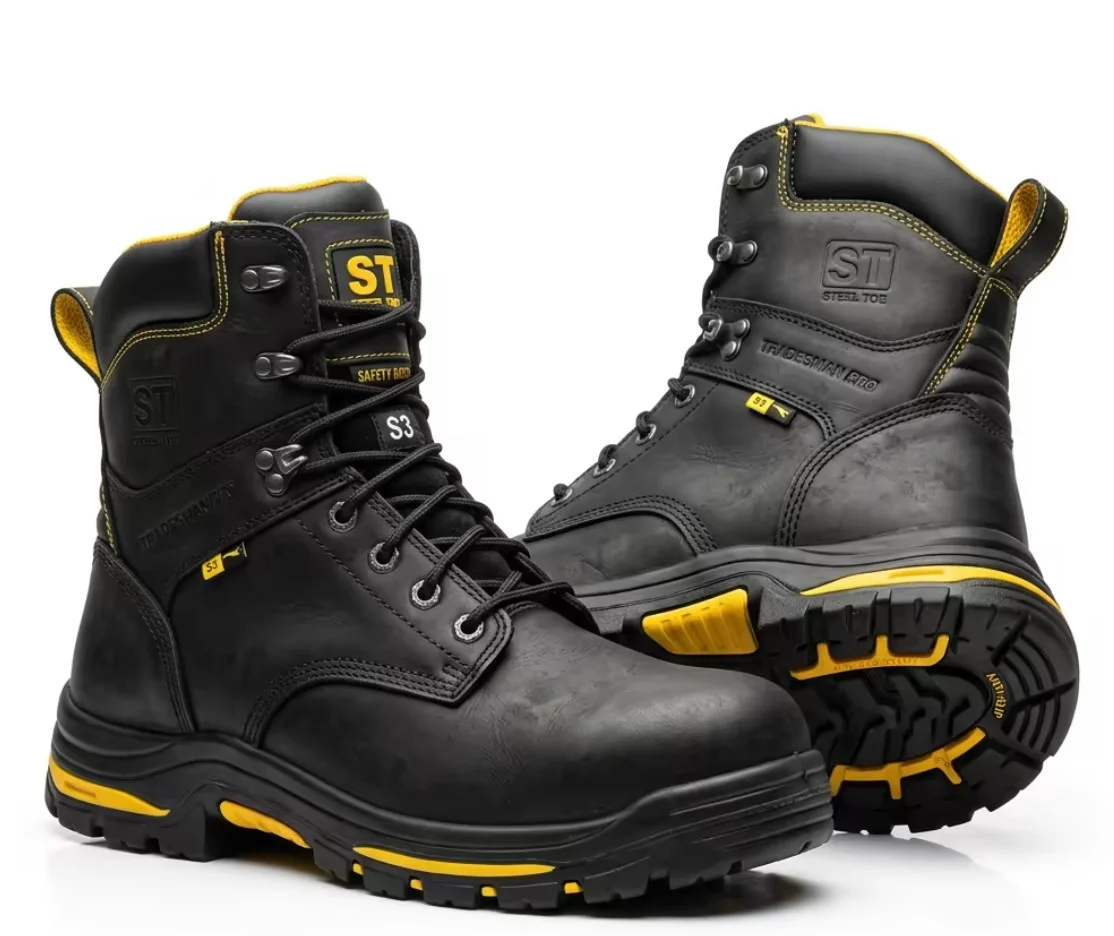
Kaye Kaye Safety Solution supplies industrial safety footwear in Singapore alongside broader personal protective equipment for businesses that need head-to-toe worker protection. Its published footwear range includes heavy-duty steel-toe and anti-slip footwear from brands including KPR, NITTI, D&D, ACE Safety, Star Safety and Safety Jogger, with EN ISO 20345 S3 referenced for its safety-footwear category.
For businesses purchasing for multiple employees, Kaye Kaye also positions itself as a B2B bulk sourcing provider and offers job-audit and safety-recommendation support.
The best safety-shoe purchase therefore comes down to four questions: What hazards does the worker face? What standard and protection are required? Does the shoe fit well enough for an entire shift? And does the purchasing arrangement make sense for the individual or workforce being equipped?
Quick Answer: Where Should You Buy Safety Shoes in Singapore?
Buy safety shoes from a supplier that can confirm the certification of the specific footwear model, explain whether its protection suits your workplace hazards, provide appropriate sizing options and support bulk procurement where required.
For industrial buyers, the lowest-priced shoe is not automatically the best value. A more useful comparison considers the footwear standard, toe and underfoot protection, slip resistance, durability, fit, worker comfort, replacement frequency and quantity required.
Kaye Kaye Safety Solution supplies safety footwear directly in Singapore and supports both individual enquiries and B2B sourcing. Its current catalogue positions its footwear around steel-toe, anti-slip and EN ISO 20345 S3 requirements for industrial environments.
Where Can You Buy Safety Shoes in Singapore?
Safety shoes can be purchased through specialist PPE suppliers, industrial safety distributors and some general footwear retailers. For higher-risk workplaces, a specialist safety supplier is usually the more useful starting point because the purchase needs to be matched to workplace hazards rather than casual footwear preferences.
Kaye Kaye Safety Solution provides direct sales and support channels in Singapore for its industrial safety footwear range. Customers can enquire about safety shoes through its sales and WhatsApp support, while businesses requiring larger quantities can discuss B2B sourcing and workplace requirements.
Kaye Kaye positions its wider PPE offering around sectors including construction and civil engineering, oil and gas and petrochemical environments, manufacturing, heavy industry, welding and marine-related work.
This changes how the buying conversation should begin.
Instead of asking only, “What is your cheapest safety shoe?”, an individual worker or employer should be prepared to explain the work environment, likely impact hazards, floor conditions, outdoor exposure, shift length and required quantity.
For a procurement team, this can also help establish a more consistent footwear specification across workers performing similar duties rather than allowing every employee to purchase a different model independently.
How Should You Compare Safety Shoe Prices in Singapore?
Safety-shoe pricing should be compared according to the protection and purchasing scope rather than the headline price alone. A low-cost pair may provide good value if it meets the required standard, fits the worker correctly and withstands the actual work environment. The same pair can become poor value if employees find it uncomfortable, if its outsole wears rapidly in the intended workplace or if it does not provide the protection required by the risk assessment.
For individual buyers, the useful comparison is therefore between models with similar protection rather than between every shoe carrying the words “safety” or “steel toe.”
For businesses, price comparison should also consider quantity, size availability, delivery arrangements, replacement needs and whether the supplier can maintain a consistent model or specification across the workforce.
Kaye Kaye's current website uses direct enquiry for its safety-footwear range rather than publishing a universal retail price for every model. Businesses looking for current pricing should therefore request a quotation based on the specific model, required quantity and workplace requirement. The best price is not necessarily the lowest figure on the quotation. It is the price that delivers the required protection, acceptable worker fit and a practical replacement cycle.
What Safety Standard Should You Check Before Buying Safety Shoes in Singapore?
One of the key Singapore standards is SS 513-1:2024, Specification for Personal Protective Equipment – Footwear – Part 1: Safety Footwear. The current standard specifies basic and additional requirements for general-purpose safety footwear, including requirements relating to mechanical hazards, slip resistance, thermal risks and ergonomic behaviour.
SS 513:2024 is also listed by Singapore's Workplace Safety and Health Council among the current Approved Codes of Practice.
This makes standards more useful than generic marketing descriptions such as “heavy duty,” “industrial grade” or “strong safety shoe.” Those phrases may describe how a product is positioned, but they do not tell a buyer exactly what requirements the particular footwear has been tested against.
Kaye Kaye's published safety-footwear category references EN ISO 20345 S3. Employers should still confirm the marking and certification of the exact model they plan to buy because a supplier can carry multiple footwear brands and constructions.
The workplace risk assessment should then determine whether that model provides the protection required for the job.
What Does S3 Mean on Safety Shoes?
S3 is a safety-footwear category within the ISO 20345 framework.
In practical terms, S3 footwear includes the core protective requirements associated with safety footwear together with additional properties intended for more demanding work environments. Under the current ISO framework, the S3 category builds on lower categories and includes additional requirements relating to water penetration and absorption, perforation resistance and a cleated outsole.
The important point is that S3 does not mean “suitable for every hazardous workplace.”
Different jobs can involve special risks that require additional or different footwear characteristics. Singapore's SS 513-1:2024 itself notes that specialised risks such as electrical insulation, chemicals, molten-metal splash, firefighting and chainsaw hazards are covered by complementary job-related standards rather than by the general safety-footwear standard alone.
A buyer should therefore read S3 as a defined protection category, not as a universal “highest safety” label.
If your work involves unusual chemical, electrical, thermal or other specialised hazards, confirm that the specific footwear is suitable for those conditions rather than assuming an S3 marking covers them automatically.
How Do You Choose the Right Safety Shoes for Your Job?
Choosing safety footwear starts with identifying what can realistically injure the worker's feet during normal work.
Impact and compression hazards are common reasons for protective toe requirements. Heavy materials, tools, equipment and components can fall, roll or shift onto a worker's foot.
Slip risk is another major consideration. Singapore's Workplace Safety and Health Council continues to identify slips, trips and falls as a major workplace safety issue and recommends appropriate slip-resistant footwear where floor conditions create risk.
The floor itself matters. A dry warehouse floor creates different conditions from a fabrication area where oil may be present or an outdoor construction site exposed to rain.
Underfoot hazards can also matter where workers encounter sharp debris or other objects capable of penetrating the sole.
Comfort should then be considered alongside protection. A worker who spends an entire shift standing and walking has different ergonomic needs from someone who wears safety footwear only occasionally.
The correct shoe is therefore not necessarily the heaviest or most heavily built model available. It is the shoe whose tested protection matches the actual hazard while remaining practical enough for the employee to wear correctly throughout the workday.
Safety Shoes for Construction and Civil Engineering
Construction workers can encounter falling materials, sharp debris, uneven ground, wet surfaces and outdoor conditions.
Protective toe performance is therefore important where tools or building materials may fall, while outsole traction matters on wet, dusty or changing walking surfaces.
Singapore's WSH Council recommends suitable PPE, including safety shoes, where workers face falling-object hazards.
Construction footwear should also be evaluated for durability because repeated contact with rough surfaces, bending and outdoor exposure can accelerate wear.
Kaye Kaye specifically positions its PPE offering around construction and civil-engineering environments, with heavy-duty steel-toe and anti-slip safety footwear included in its current catalogue.
Safety Shoes for Warehouses and Logistics
Warehouse employees often walk extensively on hard floors while working around pallets, racks, forklifts, loading areas and moving goods. Protective toes may be required where materials can fall or shift, while slip-resistant footwear is particularly relevant where floors may become wet or contaminated.
The WSH Council identifies warehousing as an environment where accidents can arise during loading, unloading and movement around machinery, while slip, trip and fall prevention remains important.
Because warehouse workers may take many steps during a shift, footwear weight, fit and comfort can become particularly important alongside protection.
Safety Shoes for Manufacturing
Manufacturing environments vary widely, so the correct footwear should reflect the production process rather than the word “manufacturing” alone. Workers may face falling components, sharp materials, contaminated floors, machinery and long periods of standing.
Where slip risk exists, the outsole needs appropriate traction. Where impact hazards are present, protective toe performance becomes more important.
The WSH Council's current slip-prevention guidance includes providing slip-resistant footwear and replacing footwear that has become worn.
Safety Footwear for Welding and Fabrication
Welding and fabrication can involve sparks, hot work, sharp materials, heavy steel components and rough working surfaces.
The footwear should therefore be assessed as part of the worker's complete PPE requirement rather than selected independently from the rest of the protective equipment.
Some specialised heat or molten-metal risks may also require footwear designed for those specific hazards rather than relying on a general safety-footwear category.
Kaye Kaye positions its broader PPE range around welding and high-risk fabrication environments and also supplies gloves, head protection, workwear and fall-protection equipment.
Safety Footwear for Marine, Oil and Gas Environments
Marine, oil and gas and petrochemical work can involve wet surfaces, outdoor exposure, heavy equipment and specialised site requirements.
Grip, durability and appropriate certification can therefore become particularly important, while some locations may have additional chemical, electrical or other site-specific requirements.
The footwear should be selected against the employer's risk assessment and site rules rather than simply because it is marketed as an industrial shoe. Kaye Kaye specifically positions its PPE range for marine, construction and oil-and-gas environments in Southeast Asia.
Steel Toe vs Composite Toe Safety Shoes: Which Should You Choose?
Steel and composite protective toe caps are different ways of providing toe protection, but the material alone should not determine which footwear you buy.
Steel toe caps are widely used in industrial safety footwear and provide a compact protective structure. Kaye Kaye's current footwear category specifically describes its range as heavy-duty steel-toe footwear.
Composite toe caps are made from non-metal materials. Depending on the specific shoe construction, they may reduce the amount of metal in the footwear and can sometimes affect overall weight and thermal behaviour.
However, “composite” does not automatically mean better, lighter or safer.
The important issue is whether the complete footwear has been tested and certified to the required standard. A protective toe material by itself does not define the overall safety performance of the shoe.
If you are comparing steel and composite options, look at the certification, full shoe weight, fit, working environment and any site-specific requirements rather than selecting purely according to toe-cap material.
Are Safety Shoes or Safety Boots Better?
A safety boot is not automatically safer than a safety shoe.
Lower-cut safety shoes can be practical in jobs requiring substantial walking and mobility where additional ankle coverage is not required.
Higher boots provide more coverage around the ankle and lower leg, which can be useful in certain outdoor, construction or industrial environments depending on the job.
The correct choice therefore depends on the workplace.
An employee working in a dry indoor production facility may have different footwear needs from a worker walking across uneven outdoor terrain or exposed job sites.
A procurement team should look at surface conditions, outdoor exposure, ankle and lower-leg hazards, the tasks being performed and the relevant PPE requirements before choosing between a low-cut shoe and a higher boot.
Footwear height should follow the hazard assessment rather than personal assumptions that “more boot” always means “more protection.”
How Important Is Safety Shoe Fit?
Fit is extremely important because protective footwear must be worn correctly for long periods if it is going to provide practical protection. The heel should feel secure without excessive movement. The front of the shoe should provide enough space for the toes without allowing the foot to slide excessively.
Because protective toe caps do not stretch like soft casual footwear, a shoe that is too short or narrow can become uncomfortable quickly.
Workers should try safety footwear with the socks they normally use at work because thicker socks can noticeably change the fit.
Feet can also swell slightly during long periods of standing or walking. A shoe that already feels extremely tight when first put on may become increasingly uncomfortable as the shift progresses.
For businesses, this is why relying only on each employee's usual casual-shoe size can cause problems. Different safety-footwear brands and models can fit differently even when the printed size is the same.
Can You Wear Safety Shoes Comfortably All Day?
Safety shoes can be worn throughout a working shift when the footwear is correctly sized, suited to the work and comfortable for the individual wearer.
Long-shift comfort depends on more than whether the toe cap fits.
The shape of the shoe, cushioning, heel hold, flexibility, weight, socks and amount of walking or standing can all influence how the footwear feels after several hours.
A shoe designed for heavy outdoor protection may feel unnecessarily bulky for a worker spending an entire day walking on a controlled indoor floor. Conversely, choosing an extremely lightweight shoe that does not provide the required protection is not an acceptable trade-off.
The aim is to find the least burdensome footwear that still provides the protection required by the job.
Employers should pay attention when workers consistently complain about pressure points, heel movement or discomfort rather than assuming discomfort is unavoidable simply because the footwear is protective.
How Should Companies Manage Safety Shoe Sizing for a Workforce?
Workforce sizing should be treated as part of the procurement process rather than an administrative detail after the footwear model has already been selected.
Employees may have different foot widths and shapes even when they normally wear the same numerical shoe size. Safety-footwear construction can also vary between brands.
For a larger purchase, the company should first confirm the available size range for the chosen model and consider validating the fit before committing the full workforce to one shoe.
This is particularly useful where a company is standardising footwear across many employees performing the same role.
A smaller initial fitting or controlled first order can identify whether the selected model works across the range of employee foot shapes before a larger quantity is purchased.
Once the model is approved, keeping a record of employee sizing can simplify future replacement orders.
Kaye Kaye offers B2B bulk sourcing and sales support, so companies planning a workforce order can confirm sizing availability and purchasing arrangements directly before committing to larger quantities.
What Information Should You Give Kaye Kaye Before Asking for a Safety Shoe Recommendation?
The more specific the workplace information, the easier it is to narrow down suitable footwear.
A useful enquiry should explain the industry, typical work activity, floor conditions, whether the job is indoor or outdoor, likely impact hazards, any wet or slippery areas, shift duration and the number of workers requiring footwear.
If the company already has a required footwear standard or site specification, that should also be provided.
For a bulk order, the expected quantity and required size range are important because a workforce purchase has different practical requirements from a single-pair enquiry.
This is particularly relevant to Kaye Kaye because its current business positioning includes B2B bulk sourcing, job audits and specific safety recommendations in addition to product supply.
Providing this information creates a more useful conversation than simply asking for “the best safety shoe” without explaining what the worker actually does.
What Should Construction Workers Look for in Safety Footwear?
Construction footwear needs to reflect the combination of impact risk, underfoot conditions, weather exposure and movement across the site. A protective toe is relevant where tools and materials may fall. Suitable outsole traction becomes important where workers encounter wet, dusty or uneven surfaces.
The WSH Council continues to identify slips, trips and falls as a major workplace issue and specifically recommends slip-resistant footwear where appropriate.
Durability also matters because construction footwear can be subjected to repeated abrasion, bending and contact with rough materials. The cheapest pair may not produce the lowest long-term cost if it needs frequent replacement or if poor comfort leads employees to avoid wearing it correctly.
What Safety Shoes Are Suitable for Manufacturing and Warehouse Work?
Manufacturing and warehouse workers frequently spend long periods standing or walking on hard surfaces, so footwear needs to balance protection with practicality.
Protective toe caps may be appropriate where pallets, components, tools or materials can fall onto the feet.
Outsole traction is important in loading areas, workshops and locations where floors can become wet or contaminated.
The WSH Council recommends non-slip work shoes where footwear traction is relevant to slip prevention.
At the same time, excessive footwear weight can become noticeable when an employee walks continuously throughout a shift.
Cushioning, fit, flexibility and total shoe weight should therefore be assessed alongside certification rather than after the purchase has already been made.
How Can Businesses Get Better Value When Buying Safety Shoes in Bulk?
Better value begins with standardising the requirement before asking suppliers for prices.
The business should first identify which workers require safety footwear, what hazards they face and what standard or protective characteristics are needed. The next step is determining quantity and sizing.
A bulk quotation can then be requested for a clearly defined requirement instead of asking several suppliers to price completely different footwear and comparing only the final number.
Kaye Kaye positions itself as a B2B bulk sourcing entity and offers job-audit and safety-recommendation support alongside its PPE supply.
For a larger workforce, consistency can also create operational benefits. If employees performing the same job use the same approved footwear model, replacement ordering and specification management can become simpler.
Procurement teams should confirm model, certification, quantities, sizes, delivery arrangements and replacement availability before evaluating the overall value of the quotation.
When Should Safety Shoes Be Replaced?
Safety shoes should be replaced when wear or damage may compromise their protective function rather than according to one arbitrary timetable for every worker.
Usage conditions differ substantially.
Footwear used daily on a construction or fabrication site may experience much greater abrasion than a pair worn occasionally in a controlled indoor environment.
The outsole deserves particular attention because worn tread can reduce traction. Singapore's WSH Council specifically recommends regular footwear inspection and replacement of worn-out footwear as part of slip, trip and fall prevention.
Separation between the sole and upper, serious cuts, cracking, damaged protective components or deterioration from heat or chemicals can also justify replacement.
A significant impact may require further assessment even if the outside of the shoe still looks usable.
Employers should therefore include footwear condition in PPE inspections rather than assuming that a pair remains safe simply because it can still be worn.
What Should You Check Before Placing a Safety Shoe Order?
Before purchasing, confirm the exact footwear model and certification rather than relying only on a general supplier-category description. Check whether the model matches the workplace hazards, whether the size range is appropriate for the workforce and whether the shoe or boot format suits the work activity.
For larger orders, clarify the quantity, available sizing, delivery arrangements and how future replacement pairs can be sourced.
If workers will wear the footwear for long shifts, fit and comfort should be evaluated before the entire order is committed.
For specialised hazards such as chemicals, molten metal, electrical risks or unusual heat exposure, confirm whether additional job-specific footwear requirements apply.
This final verification helps prevent a common procurement problem: buying footwear that is technically protective but poorly matched to the actual workplace.
Why Consider Kaye Kaye Safety Solution for Safety Footwear in Singapore?
Kaye Kaye Safety Solution may be particularly relevant to businesses that want safety footwear together with broader PPE procurement support. Its current footwear range includes heavy-duty steel-toe and anti-slip footwear associated with KPR, NITTI, D&D, ACE Safety, Star Safety and Safety Jogger, with EN ISO 20345 S3 referenced for the category.
Kaye Kaye also supplies head protection, protective gloves, industrial workwear and fall-protection equipment, allowing companies to source several categories of worker protection through the same Singapore supplier.
Its current B2B positioning includes bulk sourcing, job-audit support and specific safety recommendations, which can be useful for construction contractors, engineering companies, fabrication operations, manufacturing businesses and other employers equipping multiple workers.
The brand also traces its workwear heritage to founder Mr. Ng Chee Chow, with its current site identifying the business's origins around 1981 and describing a history built around workwear craftsmanship.
The practical value is not simply having many PPE products available. It is being able to consider footwear as one part of a broader workplace-protection requirement instead of purchasing each protective item without reference to the worker's overall job.
Frequently Asked Questions About Buying Safety Shoes in Singapore
Read More
Frequently Asked Questions
Need On-Site Safety Assistance?
Speak directly to our safety specialists for transparent quotes and fast dispatch across Singapore.